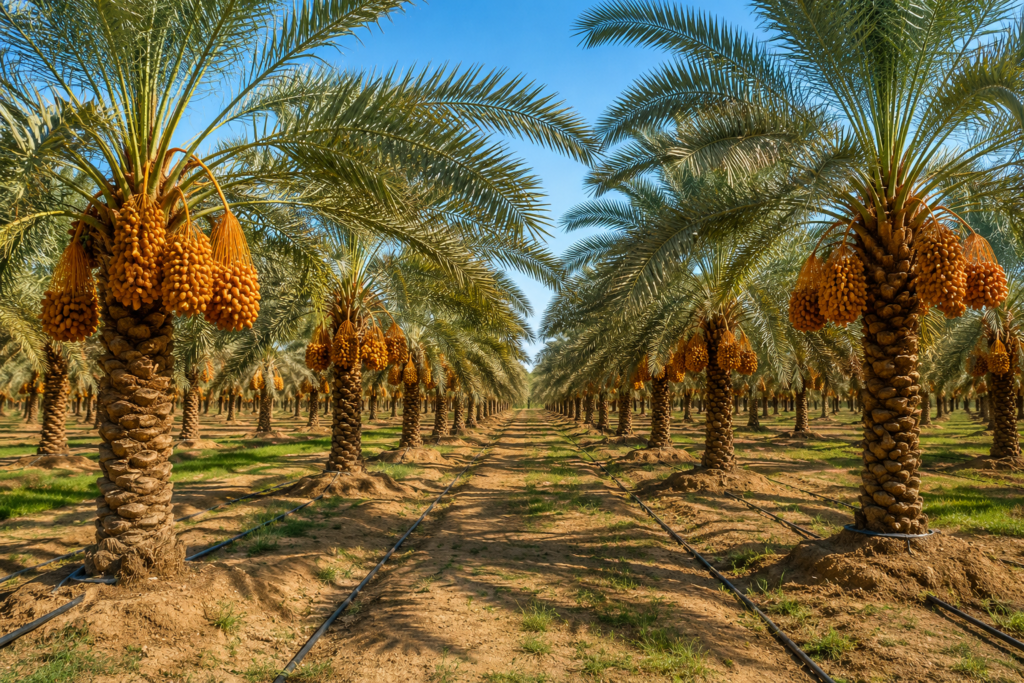
In many people’s perception, date palm trees are highly drought-tolerant crops that do not require complex irrigation systems. However, for commercial date palm plantations, stable and precise irrigation management is becoming increasingly important. Especially in countries such as Saudi Arabia, the UAE, and Oman, large-scale date farms are gradually shifting from traditional flood irrigation to smart irrigation and fertigation systems.
As a professional smart agriculture solution provider, we believes this transformation is not only driven by agricultural technology upgrades, but also by water scarcity, rising labor costs, and the modernization of agriculture across the Middle East.
Water Scarcity and Soil Salinity: The Challenges of Traditional Irrigation
The Middle East has long faced serious water shortages, with many agricultural projects relying heavily on groundwater or desalinated water resources. Traditional flood irrigation methods may appear simple, but they often result in severe water waste and increasing soil salinity problems.
For long-term commercial crops like date palms, uneven irrigation can directly affect fruit quality, sugar content, and overall yield. During the extreme summer heat, surface evaporation rates become extremely high, and many farm owners have realized that traditional experience-based irrigation is no longer sufficient for modern agriculture. According to the FAO smart irrigation project in Saudi Arabia, improving irrigation efficiency and water productivity has become a key priority for sustainable agriculture in the region.
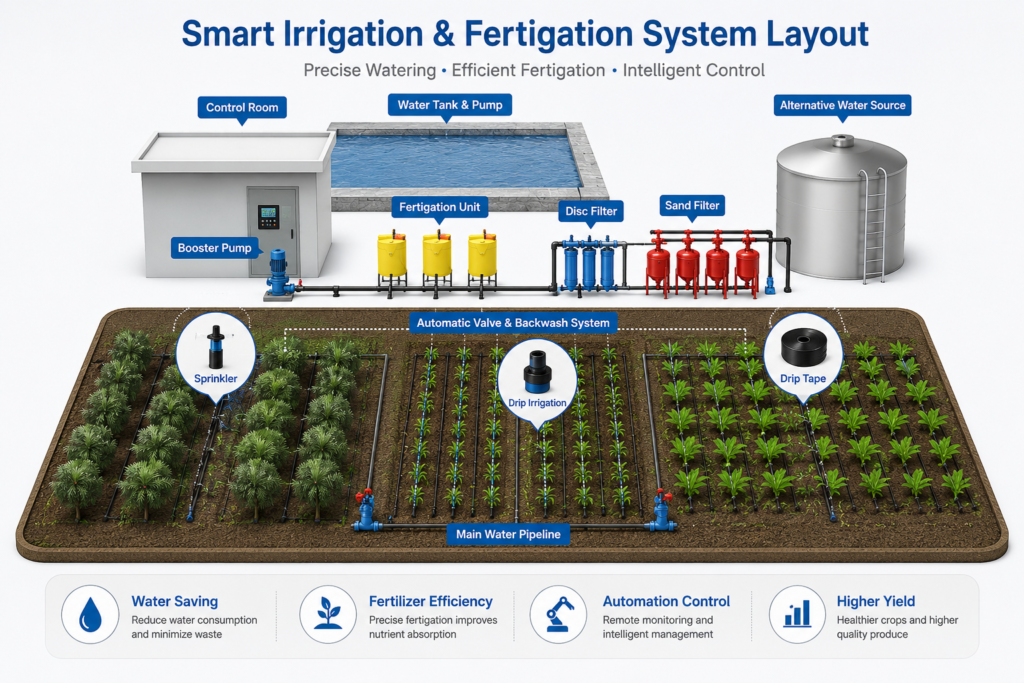
As a result, more and more date palm plantations are adopting drip irrigation systems combined with smart fertigation equipment. Compared with manual fertilization and manually operated valves, intelligent systems can precisely control irrigation schedules, water volume, and fertilizer ratios. For crops like date palms that require long growth cycles and stable management, precision control has a direct impact on productivity and crop quality.
How Smart Fertigation Systems Are Transforming Traditional Date Palm Farming
In modern date plantations, smart fertigation systems are no longer just “automatic fertilizer machines.” They are becoming complete agricultural control systems. Many large farms integrate drip irrigation pipelines, fertilizer injection systems, EC/pH monitoring devices, solenoid valves, soil moisture sensors, and remote management platforms into one automated irrigation network.
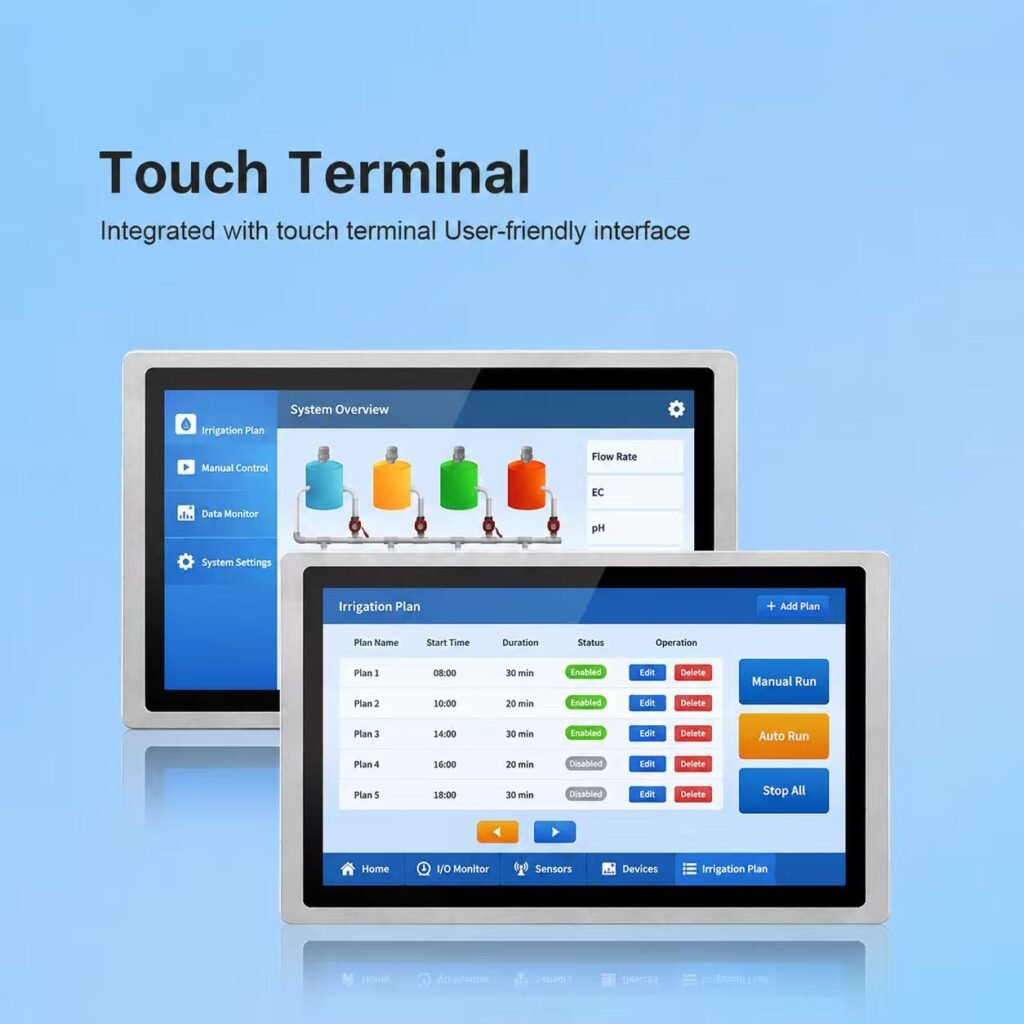
For example, many modern fertigation systems now support multi-zone control, multi-channel management, and remote monitoring functions. Farm managers can monitor irrigation conditions through computers, tablets, or smartphones and adjust irrigation strategies according to the needs of different cultivation zones. For large-scale date palm plantations, this significantly reduces the pressure of manual inspection and field labor.
One common issue in traditional date farming is uneven fertilizer distribution. Manual fertilization often makes it difficult to ensure that every section of the plantation receives the same nutrient concentration. In large farms, some areas may receive excessive fertilizer while others remain under-fertilized. Over time, this not only affects fruit quality but also increases fertilizer waste and soil salinity risks.
Smart fertigation systems can automatically adjust fertilizer ratios according to different planting zones and crop growth stages. Proper date palm irrigation management is especially important during flowering and fruit expansion stages, when water stability directly affects fruit quality and productivity. During the vegetative growth stage, flowering stage, and fruit expansion stage of date palms, the system can apply different irrigation and fertilization programs to maintain stable nutrient supply. Under the harsh climate conditions of the Middle East, stable water management is especially critical because crops become more sensitive to water fluctuations during extreme heat.
Many modern systems also provide timed and quantitative irrigation control. Based on soil moisture levels, weather conditions, and crop demand, irrigation plans can be automatically adjusted. Some systems additionally support IoT platforms, enabling remote management and real-time data visualization. For traditional farms that have long relied on manual experience, this digital management model is gradually becoming the future direction of agriculture.
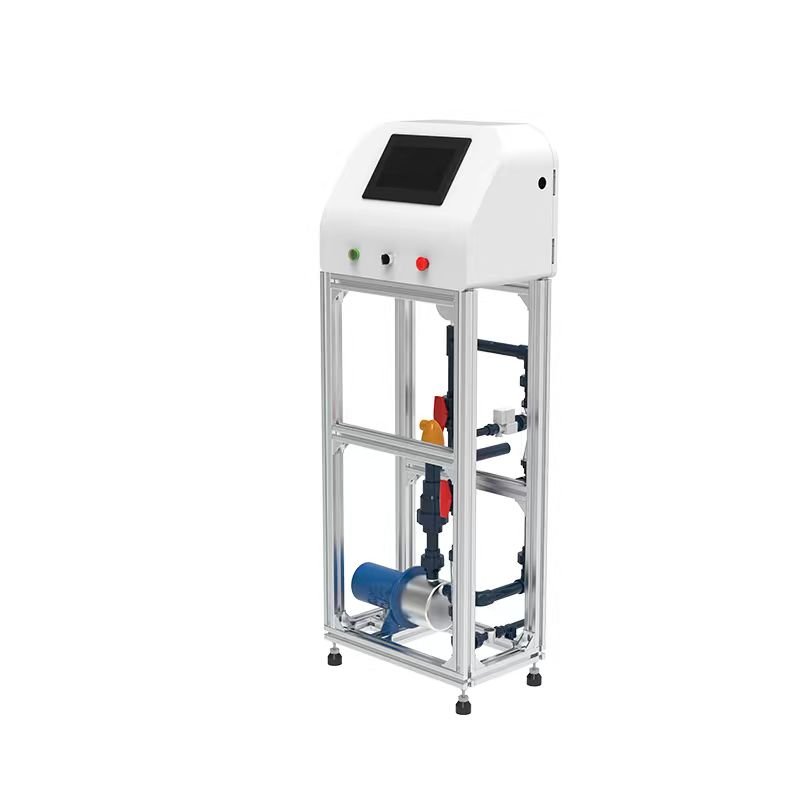
Product Focus: Smart Fertigation Equipment from Wewin Smart Agri.
To meet the unique agricultural requirements of the Middle East market, We provides smart fertigation systems with the following features, making them highly suitable for date palm plantation irrigation applications.
| Item | Specification |
| Power Supply | 220V / 50Hz |
| Total Power | 0.37KW |
| Control Method | Smart Touchscreen + Remote Platform |
| Functions | Timed Irrigation, Quantitative Fertigation, Multi-Zone Control |
| Applications | Greenhouses, Orchards, Drip Irrigation Systems |
For farms in the Middle East, water saving remains one of the greatest advantages of smart irrigation systems. Compared with traditional irrigation methods, drip irrigation combined with precision fertilization can significantly reduce evaporation and leakage losses while improving fertilizer efficiency. In many Gulf countries suffering from severe water shortages, this is not only about lowering operational costs, but also about ensuring the long-term sustainability of agricultural projects.
At the same time, acceptance of smart agriculture technologies is steadily increasing across the Middle East. While traditional farming practices once dominated the region, younger generations of farm managers are now paying much more attention to digital agriculture and long-term operational efficiency. Supported by government policies promoting agricultural modernization and water conservation, smart irrigation systems, fertigation solutions, and agricultural IoT technologies are rapidly entering the Middle Eastern market. Beyond greenhouse farming, date plantations, orchards, and high-value crop farms are becoming important application scenarios for smart agriculture equipment.
Opportunities for Chinese Smart Agriculture Equipment in the Middle East
For Chinese agricultural equipment manufacturers, the Middle East market also presents significant opportunities. Compared with European and American brands, Chinese smart irrigation and fertigation systems often offer better cost performance, stronger customization capabilities, and more flexible delivery schedules.
Today, many Middle Eastern farms are no longer focused solely on brand reputation. Instead, they pay more attention to whether a system is truly suitable for local high-temperature, arid, and saline soil conditions. Suppliers capable of providing complete agricultural solutions will have greater opportunities in the future market.
Conclusion: Smart Irrigation Is Becoming Essential Infrastructure for Modern Date Palm Farms
In the long term, the future of date palm cultivation in the Middle East will increasingly depend on water conservation, automation, and precision agriculture. Smart irrigation systems are no longer simply considered “upgraded equipment” — they are gradually becoming essential infrastructure for modern commercial date farms.
For large-scale agricultural projects, those who can better manage water resources, reduce labor dependence, and improve planting efficiency will gain stronger competitive advantages in the future.
Wewin Smart Agri is committed to bringing reliable and proven smart agriculture technologies to growers in the Middle East. If you are looking for smart irrigation solutions for date palm plantations, feel free to contact us.