For crew members working on long-distance fishing vessels, offshore platforms, and polar research ships, access to fresh vegetables has always been a challenge.
Without a reliable onboard farming system, fresh produce is often unavailable for months due to long resupply cycles and limited storage conditions. Most crews rely heavily on frozen vegetables and canned food.
The lack of fresh vegetables not only leads to insufficient vitamin intake, but also contributes to fatigue, weakened immunity, and even psychological stress.
Today, with the rapid development of smart agriculture systems for ships, this situation is changing dramatically. From compact onboard vegetable growing units to advanced hybrid farming systems, smart agriculture is expanding beyond traditional farmland and into the ocean—providing sustainable food production at sea for offshore workers.
From Single-Layer to Vertical Farming: 10x Yield Increase in Shipboard Systems
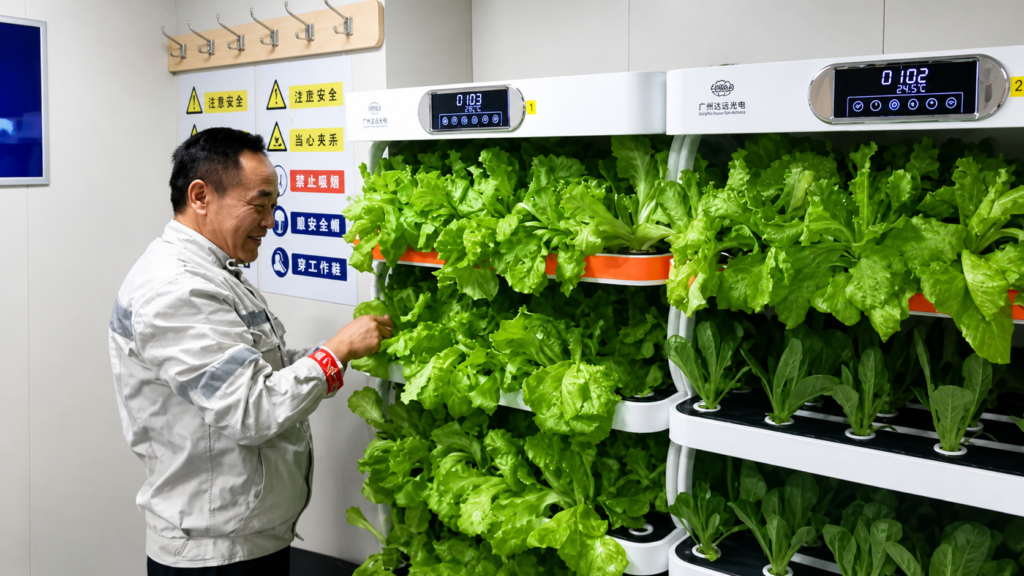
In Zhoushan, Zhejiang Province, the Agricultural Research Institute has spent nearly six years developing and upgrading intelligent onboard vegetable growing equipment.
The latest sixth-generation system introduces vertical farming technology, achieving a major breakthrough in production efficiency.
The unit measures only 67 cm in width, 187 cm in height, and 86 cm in length, similar in size to a household refrigerator. However, inside it features four independent growing layers, with a total planting area of 1.56 square meters—an increase of 6.2 times compared to the previous generation, without increasing the footprint.
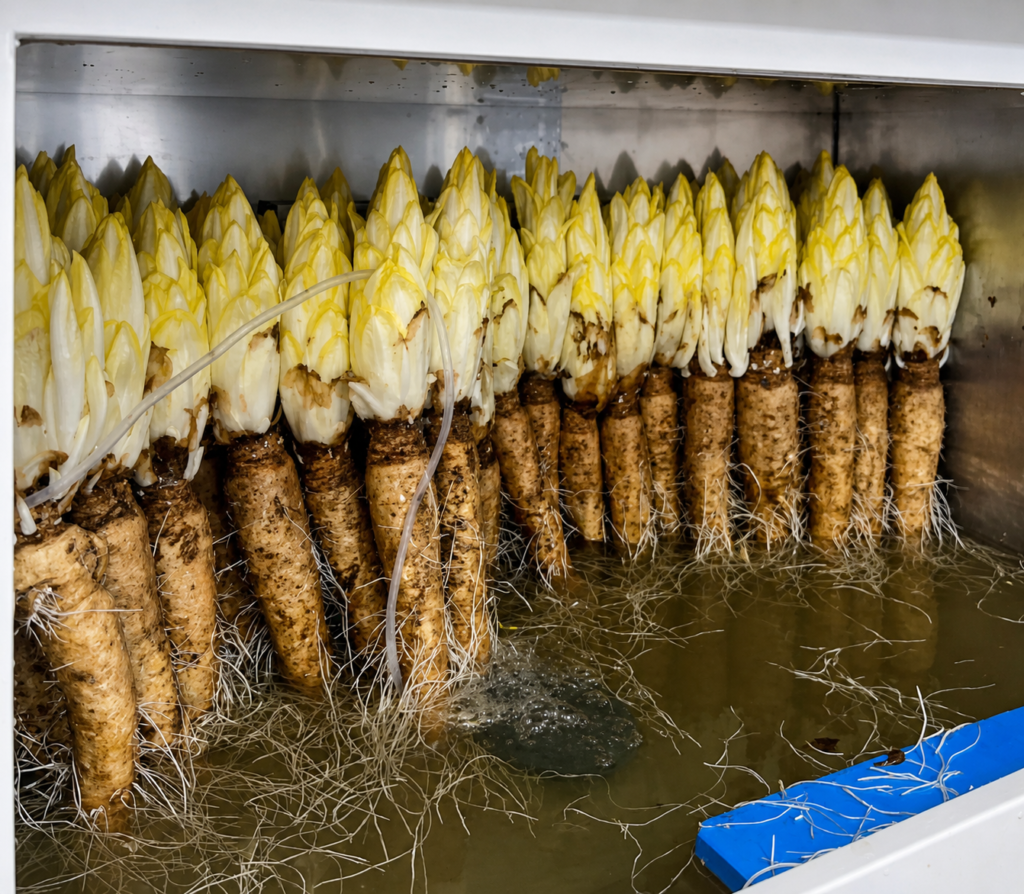
Even more impressive is the yield improvement. Monthly production has increased from 12.5 kg to 130 kg—a 10-fold increase.
The system uses semiconductor temperature control and automated climate management. Crew members simply place cleaned plant roots into the system, refill water every 10 days, and harvest fresh vegetables in about 30 days.
This onboard farming system has already been deployed on several ocean-going fishing vessels. Feedback from crew members shows improved food quality and better dietary conditions during long voyages.
For a typical vessel with around 30 crew members, fresh vegetables are no longer a rare luxury but a continuous supply.
Hybrid Vegetable–Mushroom System: Lower Energy, More Crop Diversity
While basic systems solve the problem of “having vegetables,” more advanced solutions are now addressing efficiency and diversity.
A newly developed hybrid smart farming system for ships introduces a “vegetable–mushroom symbiosis” model.
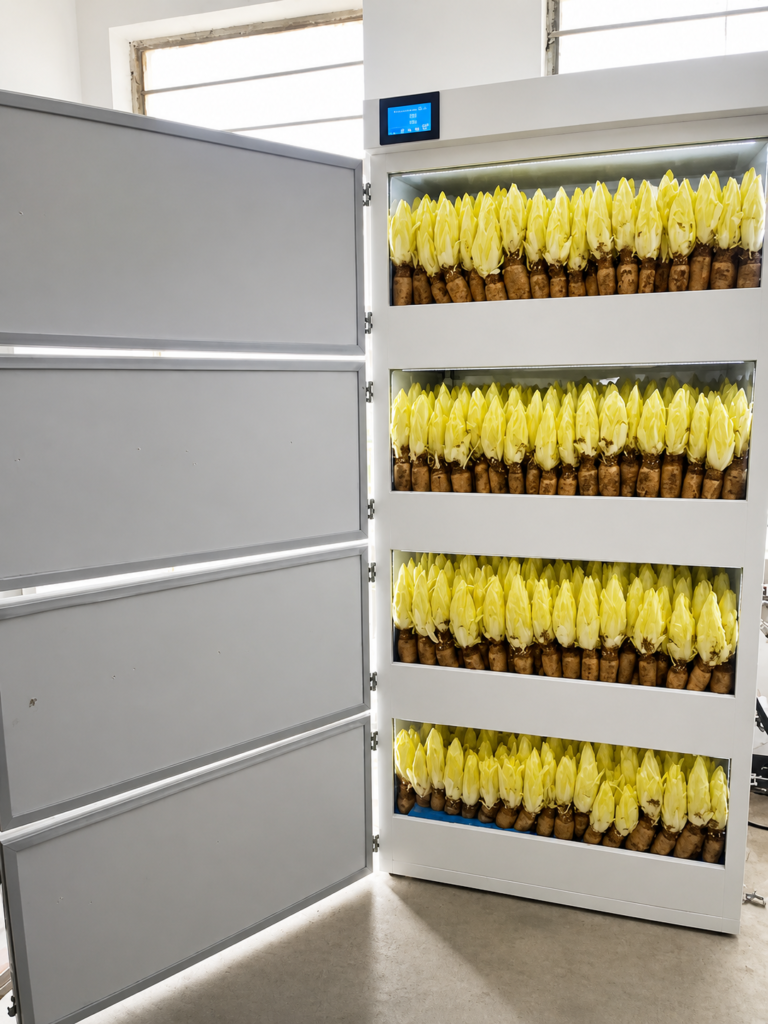
This system leverages the natural relationship between plants and fungi:
- Vegetables absorb CO₂
- Mushrooms release CO₂
This creates an efficient internal gas cycle within a closed environment, significantly reducing energy consumption caused by ventilation and temperature differences.
Performance data shows:
- Traditional systems: ~10 kWh per kg of lettuce
- New hybrid system: <6 kWh per kg
- Combined production (vegetables + mushrooms): ~3 kWh per kg
The system supports the cultivation of over 120 types of crops, including leafy greens, specialty vegetables, and edible fungi.
All crops are grown in a controlled environment without pesticides, using precise environmental control systems.
To meet marine requirements, the system is designed with:
- Stainless steel structure
- Anti-corrosion components
- Anti-vibration design
This ensures stable operation even under harsh offshore conditions.
Expanding Applications: From Ships to Extreme Environments
The evolution of smart agriculture for ships represents three major stages:
- Usable systems
- Efficient systems
- Low-energy, intelligent systems
These technologies not only solve food supply issues at sea but also demonstrate the potential of controlled-environment agriculture in extreme and mobile environments.
Beyond ships, these systems can be applied to:
- Remote islands with limited water resources
- Arid inland regions
- Offshore energy platforms
- Polar research stations
With advancements in AI-based crop control, LED spectrum optimization, and modular system design, these solutions may even extend to space agriculture in the future.
Smart agriculture is no longer just about increasing land productivity—it is becoming a critical solution for food security in challenging environments.
Conclusion: A New Direction for Offshore Food Production
Smart agriculture systems are transforming how food is produced in extreme environments.
From compact onboard growing cabinets to fully integrated ship farming systems, these technologies provide a reliable, sustainable, and scalable solution for fresh food production at sea.
For businesses and operators in maritime, offshore, or remote environments, investing in onboard agriculture systems is no longer experimental—it is becoming a practical and necessary solution.
CTA
Looking for a reliable smart agriculture system for ships or remote environments?
We provide customized solutions including hydroponic systems, mushroom growing cabinets, climate control, and IoT monitoring.
👉 Contact us to get your project plan.