This area in Hubei Province, China, shares a similar geographical latitude and climate with Changshan in Zhejiang Province, making it highly suitable for pomelo cultivation. Over the years, the local pomelo industry has gradually expanded and become one of the region’s most important specialty agricultural sectors.
The orchard mainly cultivates pomelo, sweet citrus pomelo, and other citrus varieties, while also developing value-added products such as pomelo wine and pomelo tea. As the business continued to grow, higher standards were required for fruit quality, yield stability, and standardized orchard management.
This pomelo is a hybrid variety developed from Shanye pomelo and Crispy pomelo. The fruit features a smooth peel, bright color, juicy white flesh, and a balanced sweet-sour flavor. It is suitable for both fresh consumption and food processing applications. Rich in vitamin C, flavonoids, and organic acids, the fruit has strong market potential as a premium agricultural product.
However, as the planting area expanded, the orchard began facing increasing challenges with traditional irrigation and fertilization methods. Manual irrigation was labor-intensive, inefficient, and unable to ensure uniform water and fertilizer distribution. In hilly orchard environments, irrigation management became even more difficult.
During hot seasons, water shortages frequently occurred, while traditional experience-based irrigation made it difficult to precisely control water usage. This not only increased labor costs but also resulted in water waste and fertilizer loss, directly affecting fruit quality and yield consistency.
To improve orchard management efficiency and modernize production, the farm decided to implement a smart agriculture management system and upgrade the orchard with a smart orchard irrigation system.
Core Challenges
Before implementing the smart irrigation solution, the orchard faced several major operational challenges.
Rising Labor Costs
The pomelo orchard is located in hilly terrain with scattered planting zones and uneven elevations. Traditional irrigation and fertilization required a large workforce to manually operate across different sections of the farm.
During peak fertilization seasons and hot summer periods, the orchard often needed dozens of workers simultaneously, resulting in high labor expenses and seasonal labor shortages. According to the farm management team, irrigation and fertilization labor costs accounted for a significant portion of the orchard’s annual operational expenses.
Inefficient Water and Fertilizer Management
Under traditional management methods, irrigation schedules and water volumes were mainly determined by experience rather than real-time data. Over-irrigation frequently washed away fertilizers, while insufficient irrigation caused water stress in trees.
This issue was especially serious on hillside terrain, where trees at higher elevations often lacked water while lower areas suffered from excess moisture. Such inefficient orchard watering systems not only wasted water and fertilizer resources but also affected tree growth consistency.
Inconsistent Fruit Quality
Uneven water and nutrient supply directly impacted fruit quality. Some trees produced larger and sweeter fruits, while others produced smaller or more acidic fruit. As the orchard expanded into pomelo wine and pomelo tea processing, consistent raw material quality became increasingly important.
Traditional management methods could no longer meet the orchard’s growing demand for standardized production and premium fruit quality.
These challenges ultimately drove the orchard toward digital and intelligent irrigation management.
Smart Orchard Irrigation Solution
To systematically solve these issues, the orchard implemented a smart orchard irrigation system integrated with an orchard fertigation system to achieve precise irrigation and scientific fertilizer management.
Front-End Monitoring System
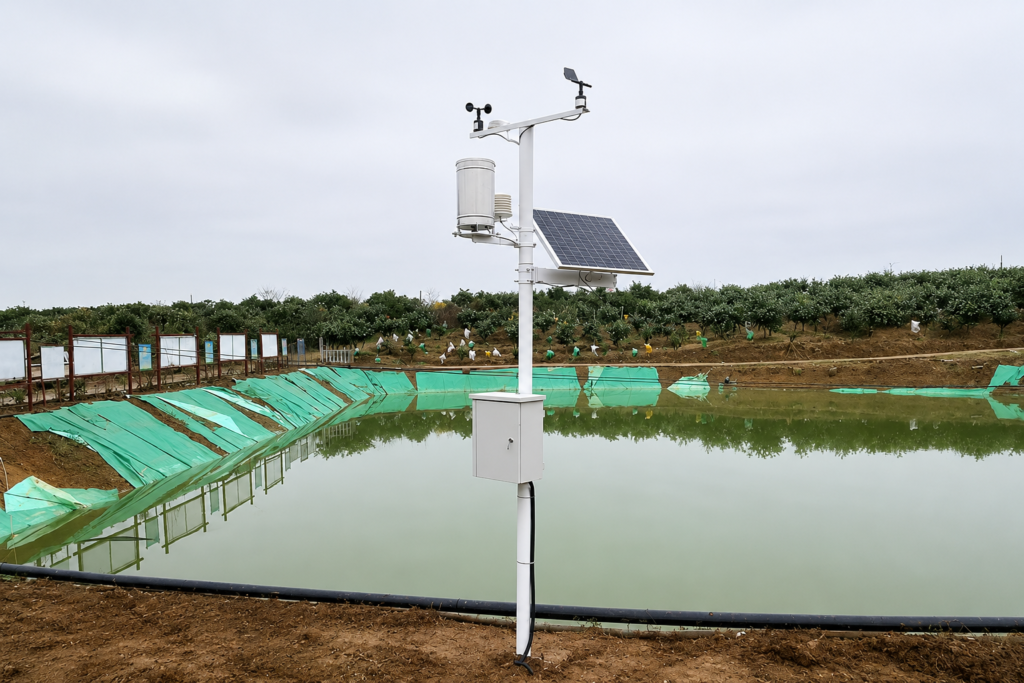
The orchard deployed soil moisture monitoring stations and agricultural weather stations across key planting areas. The monitoring system continuously collects soil moisture, soil temperature, pH values, rainfall, solar radiation, wind speed, and environmental temperature data.
All data is transmitted to the cloud platform in real time, allowing managers to monitor orchard conditions remotely instead of relying solely on manual inspection and experience.
Intelligent Irrigation Decision-Making
The cloud-based control platform was configured with optimal soil moisture ranges and fertilizer formulas for different pomelo growth stages.
Based on sensor data, crop growth models, and weather forecasts, the system automatically determines:
- Whether irrigation is required
- How much water should be applied
- What fertilizer ratio should be used
For example, during the fruit expansion stage, the orchard fertigation system automatically increases potassium fertilizer ratios. During high-temperature periods, irrigation schedules are adjusted in advance to reduce heat stress on the trees.
Precision Fertigation and Irrigation Control
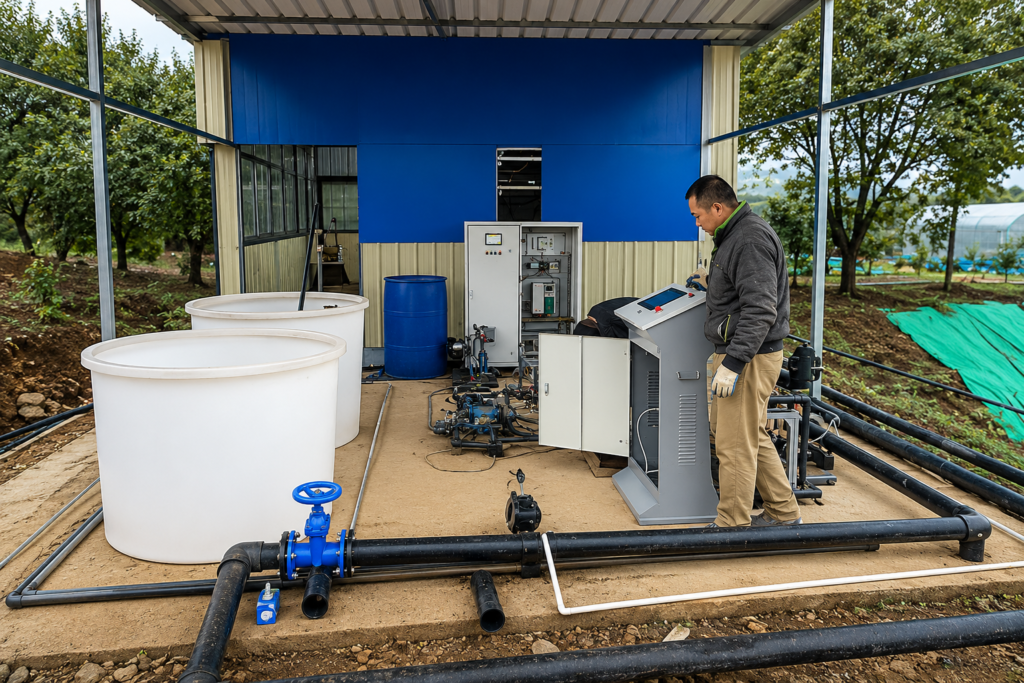
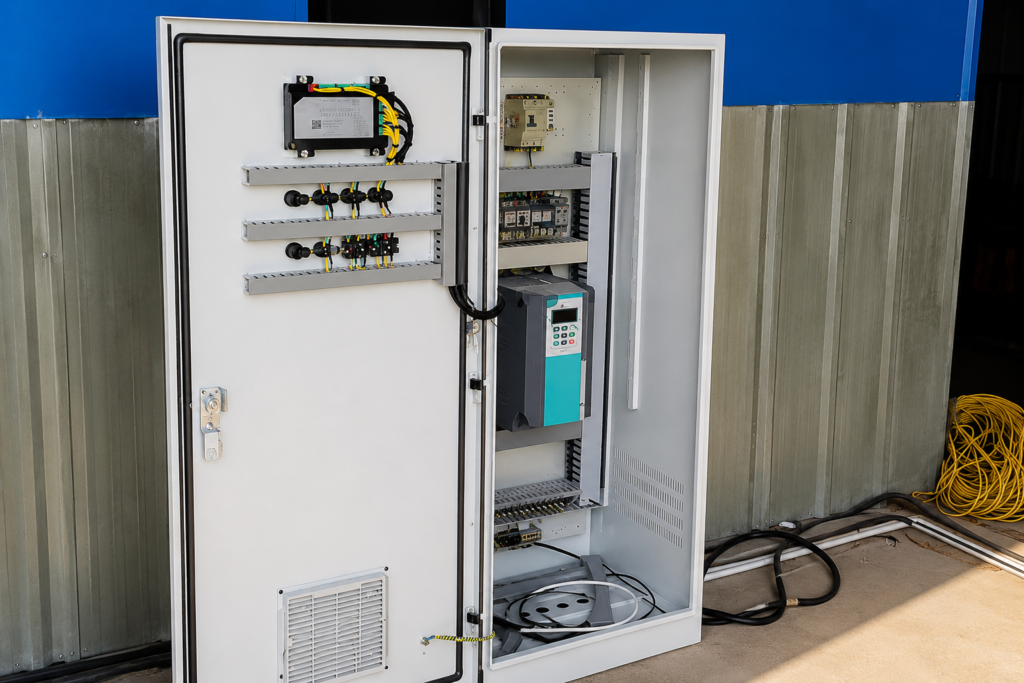
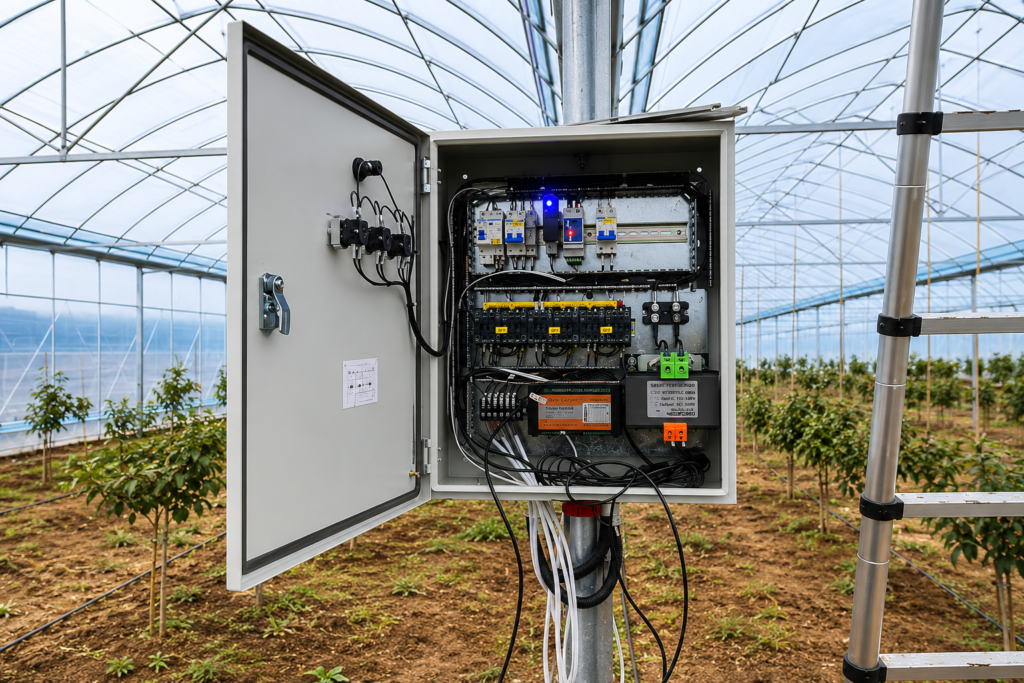
The smart fertigation system acts as the execution center of the entire irrigation network. It automatically handles fertilizer mixing, nutrient injection, and water delivery based on cloud platform instructions.
The orchard drip irrigation system supports:
- Timed irrigation
- Automatic rotational irrigation
- Multi-zone irrigation control
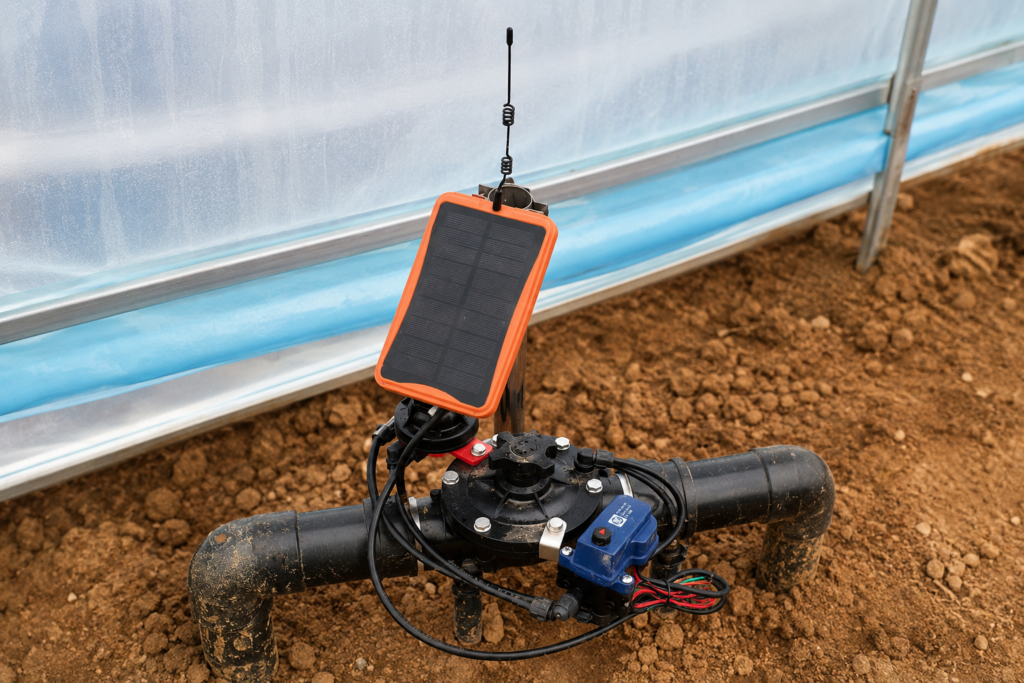
- Remote irrigation management via mobile APP
Managers can remotely monitor equipment status and manually adjust irrigation schedules from smartphones or computers at any time.
The entire system transformed orchard management from “experience-driven irrigation” into “data-driven precision irrigation.”
Project Results
After the smart irrigation system was implemented, the orchard achieved significant improvements in operational efficiency, water management, and fruit quality.
Improved Orchard Management Efficiency
Previously, workers had to manually move irrigation pipes across the orchard, and a skilled worker could only irrigate a limited area per day.
Now, managers can remotely monitor soil moisture levels and control irrigation valves directly from a mobile phone. Tasks that once required multiple workers can now be completed by a single operator within minutes.
According to the orchard management team, labor input for irrigation and fertilization was reduced by more than two-thirds after the system was introduced.
Higher Water and Fertilizer Efficiency
The orchard drip irrigation system precisely controls irrigation timing and water volume based on actual soil moisture conditions, significantly reducing water waste caused by traditional flood irrigation methods.
After adopting the smart orchard irrigation system, water consumption was reduced by more than 30%, while fertilizer utilization efficiency improved substantially.
This not only lowered operational costs but also reduced environmental impact.
More Consistent Fruit Quality
Through precise water and nutrient delivery, each pomelo tree receives a more balanced supply of moisture and fertilizer.
As a result, fruit size, sweetness, and appearance consistency improved significantly, while the percentage of premium-grade fruit increased considerably.
This provides strong support for the orchard’s premium branding and deep-processing business development.
Reduced Operational Risks
The system also includes automatic alert functions. When soil moisture becomes too high or too low, or when equipment abnormalities occur, the system immediately sends warning notifications to managers.
Even when operators are off-site, potential issues can be identified and resolved quickly, greatly reducing production risks caused by drought or equipment failure.
Industry Value and Future Potential
The successful implementation of the Pomelo Smart Orchard Irrigation Project demonstrates the reliability and practicality of smart fertigation and orchard irrigation systems in hilly orchard environments.
This solution is not only suitable for pomelo farming but can also be applied to citrus orchards, grape farms, blueberry plantations, and other commercial fruit orchards.
For agricultural enterprises and farming cooperatives seeking modernization and water-saving agriculture solutions, this project provides a highly valuable reference model.
As precision agriculture and smart irrigation technologies continue to develop globally, data-driven orchard irrigation systems are expected to become an increasingly important part of modern fruit farming.