This article provides a comprehensive overview of smart agriculture as it stands in 2025 — the structural challenges driving adoption, the measurable benefits of IoT-based automation, and a detailed examination of Wewin Smart Agriculture’s three core solution pillars: smart irrigation, greenhouse automation, and vertical farming. Written for farm managers, agri-business investors, and technology officers, the guide covers technical architecture, real-world performance data, sustainability and ESG implications, implementation approaches, and answers to professional-level Q&As. Whether you are evaluating smart agriculture for open fields, protected cultivation, or indoor vertical farms, this document outlines what works, why it matters, and how Wewin delivers practical, reliable, and integrated solutions.
The New Reality of Agriculture: Pressure, Change, and Opportunity
Agriculture in 2025 is under more pressure than at any point in recent history. Farmers around the world are being asked to do something incredibly difficult: produce more food, with fewer resources, under increasingly unpredictable conditions.
Four structural challenges define this new reality:
Water scarcity
According to the FAO, agriculture accounts for about 70% of global freshwater withdrawals.
The World Bank estimates that by 2030, global water demand could exceed supply by 40% if current practices continue.
Irrigation efficiency in traditional surface systems is often only 30–40%, meaning 60–70% of the water is lost to runoff, evaporation, or deep percolation before reaching plant roots effectively.
Labor shortages and rising costs
Many countries face aging rural populations and difficulty attracting young people to farming.
Seasonal labor is less predictable, while wages and compliance costs keep rising.
Tasks like manual valve adjustment, greenhouse climate control, and daily monitoring are increasingly difficult to sustain with limited staff.
Climate variability and risk
More frequent droughts, heatwaves, and unexpected cold snaps increase yield volatility.
Traditional calendar-based farming practices are becoming less reliable.
Consistent yields require responsive systems that can adapt hour by hour, not just season by season.
Sustainability and regulation
Markets and governments are pushing for water-efficient, low-emission, and residue-safe production.
Major retailers already prefer suppliers that can document responsible water and energy use.
Carbon footprint and ESG reporting are gradually extending from major corporations to their agricultural supply chains.
Within this context, digitization, automation, and data-driven decision-making in agriculture are no longer optional luxuries. They are becoming essential capabilities.
Wewin Smart Agriculture Co., Ltd. positions itself precisely at this intersection: delivering practical, reliable, integrated smart farming systems that help farms reduce costs, save water, and increase yields — while building long-term, win-win partnerships with growers and agri-businesses.
Who Is Wewin Smart Agriculture?
Wewin Smart Agriculture Co., Ltd. is a provider of integrated smart agriculture solutions for modern farming, focusing on:
- Smart irrigation systems
- Greenhouse automation
- Vertical farming and indoor cultivation
The core philosophy is embedded in the name: “We Win” — meaning Wewin aims to grow together with customers by delivering real, measurable value, not just hardware.
Key characteristics of Wewin’s approach:
- Practicality first: Solutions are designed for real-world conditions — dusty fields, inconsistent power, varying internet connectivity, and mixed skill levels in farm teams.
- Reliability over gadgets: Robust sensors, industrial-grade controllers, and intuitive software are prioritized over experimental features that can fail in the field.
- Integration instead of fragmentation: Wewin’s systems combine sensors, controllers, communication, and analytics into cohesive solutions rather than isolated components.
- Sustainability as a performance metric: Water savings, energy efficiency, and resource optimization are built into system design, not added as an afterthought.
Wewin’s technology stack sits at the convergence of:
- IoT (Internet of Things) – sensor networks and connected devices
- Automation & control engineering – programmable logic, actuators, climate control
- Data analytics – real-time monitoring, alerts, and decision support
- Practical agronomy – irrigation strategies, climate recipes, nutrient management
The result: smart agriculture systems tailored to open fields, greenhouses, and indoor vertical farms, designed to boost productivity and reduce resource consumption and labor dependency.Why Smart Agriculture Is Growing So Fast (2024–2025 Snapshot)
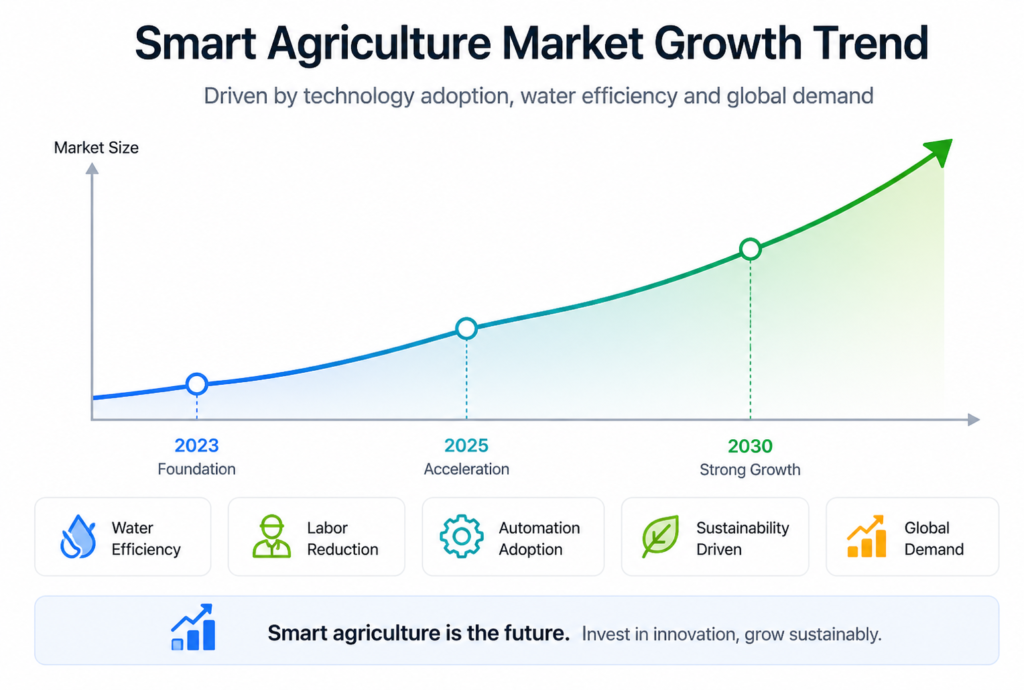
The global smart agriculture market has been expanding rapidly. While figures differ slightly across analysts, recent 2024–2025 reports align on key trends.
3.1 Market Growth and Scale
Multiple industry research firms project strong growth for smart agriculture technologies through 2030. The table below illustrates approximate ranges from several widely cited 2023–2024 reports (rounded for clarity):
| Indicator | Approximate Value / Range (2024–2025) | Notes |
|---|---|---|
| Global smart agriculture market size | ~USD 20–25 billion (2023) | Includes precision farming, smart irrigation, and farm management |
| Projected CAGR (2024–2030) | ~10–14% | Driven by water scarcity, labor shortages, and tech cost reduction |
| Smart irrigation segment share | ~15–25% of smart agriculture market | One of the fastest growing segments |
| Greenhouse & indoor farming solutions | ~USD 4–6 billion (2023, est.) | Strong growth in Asia, Europe, Middle East |
| IoT devices in agriculture (global) | >70 million connected devices (est. 2023–2024) | Sensors, valves, controllers, weather stations, etc. |
Note: Values are compiled from multiple industry analyses reported through 2023–2024; specific figures vary by source, but the growth trajectory is consistent.
3.2 Key Drivers Behind Adoption
Several macro forces align with Wewin’s offerings:
Water regulations and pricing
More regions are implementing water quotas, tiered pricing, and monitoring. Smart irrigation that can document water use and optimize application is becoming a compliance and competitive advantage.
Input cost pressure
Higher prices for fertilizers and energy shock many growers. Efficient irrigation and climate control reduce over-irrigation and avoid wasted nutrients and energy.
Retail and consumer expectations
Large retailers want consistent quality, stable volumes, and traceability. Farms with controlled environments and data-supported processes have a stronger position in such supply chains.
Declining technology costs
Sensors, cloud platforms, and connectivity have become more affordable and robust. The cost of implementing a basic IoT-based monitoring system is dramatically lower than 10 years ago.
Wewin’s smart irrigation, greenhouse automation, and vertical farming solutions align directly with these drivers.Core Solution Pillar 1: Smart Irrigation Systems
4.1 What Is Smart Irrigation?
Smart irrigation goes beyond simply switching valves on and off. It combines:
- Sensors – soil moisture, EC (electrical conductivity), temperature, sometimes plant-based sensors
- Weather data – local weather stations plus online forecasts
- Control logic – algorithms considering crop type, growth stage, and substrate
- Actuation – valves, pumps, fertigation equipment
- Connectivity – wired or wireless networks linking fields to a controller and cloud platform
Wewin’s smart irrigation systems are designed to:
- Match water application to actual plant needs
- Minimize runoff, deep percolation, and evaporation losses
- Automate repetitive tasks like valve rotation and pump scheduling
- Generate reports and alerts for water use, system status, and anomalies
4.2 Typical Architecture of a Wewin Smart Irrigation System
A typical Wewin smart irrigation deployment includes:
Sensor Layer
- Soil moisture probes at different depths
- Soil temperature sensors
- Irrigation line pressure sensors
- Flow meters to monitor actual volume applied
- Optional: weather station (solar radiation, wind, humidity, rainfall)
Control Layer
- Central controller (PLC or industrial-grade RTU) with I/O modules
- Local valve controllers in distributed zones
- Pump controllers with variable frequency drives (VFDs) for energy efficiency
Communication Layer
- LoRaWAN, 4G/5G, NB-IoT, or wired Ethernet — chosen based on farm conditions
- Edge computing capability for local decision-making if cloud connection fails
Application Layer
- User interface accessible via web and mobile
- Dashboard for monitoring soil moisture, water usage, and system status
- Rule-based or algorithm-based irrigation scheduling
- Data logging for traceability and analysis
4.3 From Calendar-Based to Data-Driven Irrigation
Many farms still irrigate based on:
- Fixed schedules (e.g., “every 2 days for 45 minutes”)
- Visual plant observation
- Rough rules of thumb inherited over decades
This approach:
- Often over-irrigates during cooler periods
- Under-irrigates during heatwaves
- Can lead to salt accumulation, nutrient leaching, and yield inconsistency
Wewin’s smart irrigation shifts this to data-driven irrigation, where decisions are guided by:
- Soil moisture thresholds
- Evapotranspiration (ET) estimates
- Crop growth stage
- Real-time response to weather changes
4.4 Typical Performance Improvements from Smart Irrigation
While exact results depend on crop, climate, and management, real-world smart irrigation deployments often achieve:
- Water savings: 20–50% compared to conventional flood or timer-based systems
- Energy savings: 10–30%, especially where pumps run more efficiently with pressure and flow control
- Yield improvement: 5–25%, particularly for high-value crops sensitive to water stress
- Labor reduction: 30–60% fewer hours needed for manual valve operations and field checks
The table below illustrates typical ranges observed across multiple smart irrigation projects globally. These are conservative, aggregated figures based on industry case studies and reports.
| Metric | Conventional Irrigation (Typical Range) | Smart Irrigation with IoT & Automation (Typical Range) | Typical Improvement Range |
|---|---|---|---|
| Irrigation water use per season | 100–120% of crop water requirement (ETc) | 80–95% of crop water requirement (ETc) | 20–40% water savings |
| Irrigation efficiency | ~50–60% | ~75–90% | +20–30 percentage points |
| Pump energy use | Baseline | 10–30% reduction | 10–30% savings |
| Labor for irrigation tasks | 100% (baseline) | 40–70% of baseline | 30–60% labor savings |
| Average yield stability (year-to-year) | High variability | Reduced variability | More predictable yields |
Wewin’s focus on field-proven deployment (robust hardware, clear interfaces, localized support) aims to ensure that farms actually realize these benefits, instead of leaving advanced functionalities unused.
Core Solution Pillar 2: Greenhouse Automation
5.1 Why Automate Greenhouses?
Greenhouses allow growers to partially control climate, but manual operation has limits:
- Opening and closing vents by hand is labor-intensive and inconsistent.
- Temperature and humidity can change rapidly; manual response is often too slow.
- Different crops — or even the same crop at different stages — need tailored climate conditions.
In markets where energy and labor are expensive, or where demand for consistent, high-quality produce is strong, automated greenhouses deliver a strong return on investment.
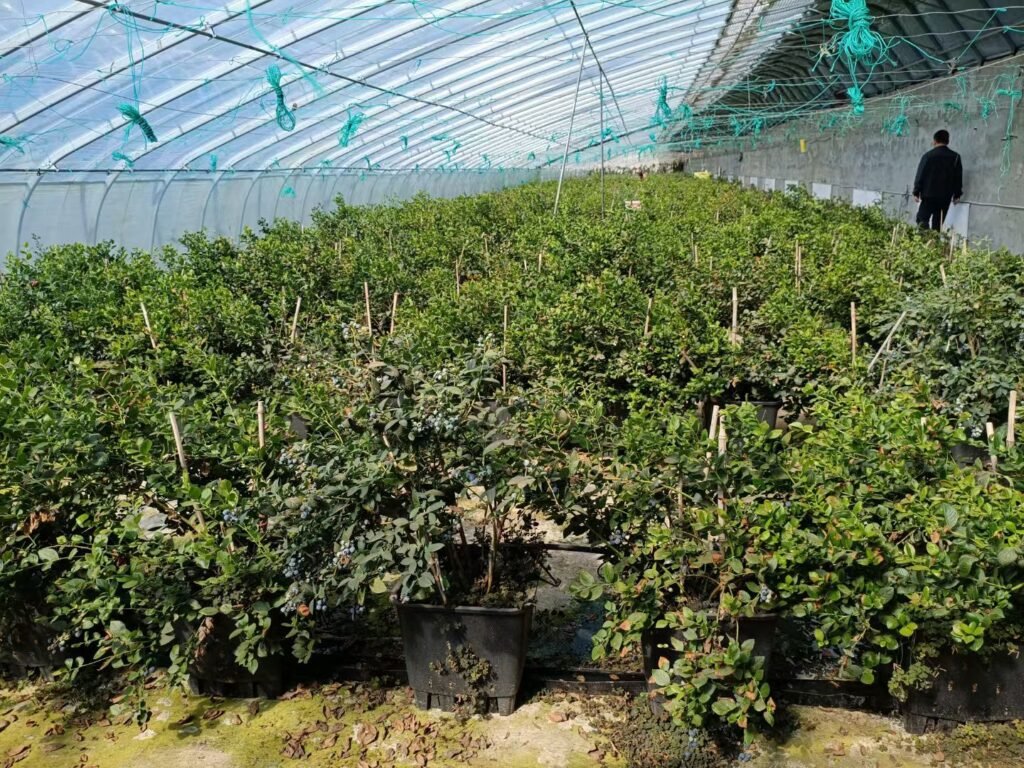
5.2 What Does Wewin Greenhouse Automation Include?
Wewin’s greenhouse automation solutions integrate:
Climate Control
- Sensors: inside/outside temperature, humidity, CO₂, light intensity
- Actuators: side and roof vents, fans, shading screens, heaters, coolers, fogging systems
- Control logic: proportional-integral-derivative (PID) or rule-based control to maintain target ranges
Irrigation & Fertigation
- Drip irrigation within greenhouse benches or substrate bags
- Fertigation units that adjust nutrient solution composition based on EC and pH
- Irrigation triggers based on substrate moisture, drain EC, or solar radiation
Environmental Strategies for Different Crops
- Crop-specific climate recipes (e.g., for tomatoes, cucumbers, leafy greens)
- Day–night temperature differentials, humidity management, and CO₂ strategies
Data Logging & Remote Management
- Historical climate graphs for diagnosing issues
- Alerts if temperature exceeds thresholds, pump fails, or CO₂ falls too low
- Remote adjustments via mobile or PC, enabling experts to support operations from anywhere
5.3 Practical Benefits of Greenhouse Automation
Automating greenhouses yields both quantitative and qualitative benefits:
Yield and quality
- More uniform fruit size and color
- Reduced problems caused by humidity spikes (e.g., fungal diseases)
- Better pollination conditions for crops like tomatoes and peppers
Resource use
- Optimized climate reduces unnecessary heating and cooling
- More precise watering and fertigation reduce runoff and salt buildup
Labor and management
- Lower need for constant manual supervision
- Reduced human error in climate decisions
- Managers can oversee multiple sites centrally
A simplified comparison of non-automated vs. automated greenhouse operations is shown below:
| Aspect | Non-Automated Greenhouse | Wewin Automated Greenhouse |
|---|---|---|
| Climate control | Manual vent/fan operation; reactive | Automated, sensor-driven, proactive adjustments |
| Irrigation scheduling | Timers or manual control | Sensor-, recipe-, or solar-radiation-based |
| Nutrient management | Manual mixing, often imprecise | Automated fertigation with EC & pH control |
| CO₂ enrichment (if used) | Manual or basic timer | Integrated with ventilation & light conditions |
| Data & traceability | Minimal records | Full logs of climate, irrigation, and fertigation |
| Labor requirement | High daily presence needed | Lower, supervision and exceptions focus |
| Yield consistency | Variable | Higher uniformity and predictability |
Wewin’s systems are designed to be modular, allowing growers to start with irrigation and basic climate control, then add more functions (such as fertigation, advanced CO₂ management, or predictive control) as their operations grow.
Core Solution Pillar 3: Vertical Farming & Indoor Cultivation
6.1 Why Vertical Farming Matters Now
Vertical farming and controlled environment agriculture (CEA) are not just futuristic concepts; they are present realities in many urban and peri-urban areas. Several trends are driving adoption:
- Urbanization and demand for local, year-round fresh produce
- Food safety and biosecurity considerations
- Pressure on arable land and water resources
- Need for consistent supply for high-end retail, food service, and pharmaceutical plants
Vertical farms typically use:
- Rack-based growing systems with multiple layers
- LED lighting with tailored spectral output
- Hydroponic or aeroponic systems
- Fully controlled climate (temperature, humidity, CO₂, airflow)
The challenge is that vertical farms combine high CAPEX and high OPEX. Every system — lighting, HVAC, pumps, nutrient dosing — must be finely tuned to achieve profitability. This is where integrated control platforms like those provided by Wewin become critical.
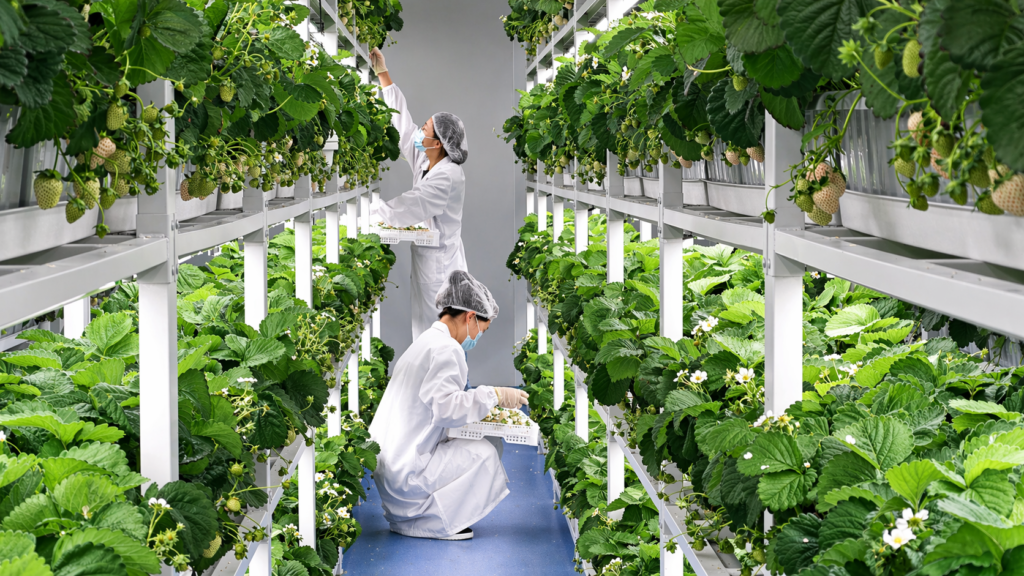
6.2 Wewin’s Role in Vertical Farming Systems
Wewin’s vertical farming solutions focus on:
Integrated Environmental Control
- Coordinating HVAC, dehumidification, CO₂ injection, air circulation, and lighting schedules
- Maintaining stable microclimates at each production level or zone
Irrigation & Nutrient Management
- Managing hydroponic nutrient recipes for different crop varieties
- Monitoring recirculating solution EC, pH, and temperature
- Automating dosing, top-up, and sanitation processes
Data-Driven Crop Recipes
- Linking light intensity and photoperiod with irrigation frequency and nutrient strength
- Adjusting parameters by growth stage (germination, vegetative, finishing)
- Logging all parameters for continuous optimization and repeatability
Operational Efficiency & Scalability
- Enabling centralized control of multiple rooms or sites
- Supporting alarms, maintenance schedules, and operating reports
- Ensuring compatibility with existing building automation or SCADA systems when needed
For leafy greens and herbs, vertical farms can achieve yields dozens of times higher per square meter compared to traditional open-field production, while using up to 90–95% less water. But these numbers are only attainable with reliable, integrated automation.
IoT and Sensor Integration: The Backbone of Wewin Systems
At the core of Wewin’s solutions is the integration of sensors, control technologies, and IoT into a cohesive network.
7.1 Types of Sensors Commonly Used
Soil and Substrate Sensors
- Volumetric water content (VWC)
- Soil or substrate temperature
- EC in the root zone or drainage
Climate Sensors
- Air temperature and relative humidity
- CO₂ concentration
- Light intensity (PAR or lux)
- Wind speed and direction for open-field applications
System Performance Sensors
- Flow meters (for water volume)
- Pressure sensors (to ensure proper line pressure)
- Tank levels (fertilizer, acid/alkali, water reservoirs)
- Power consumption meters (for pumps, lights, HVAC)
7.2 Communication and Data Management
Wewin designs systems to operate reliably in diverse connectivity environments:
- On-site networks: RS485, Modbus, CAN-bus, and digital/analog I/O for robust, low-latency control
- Wireless connectivity: LoRa/LoRaWAN for long-range, low-power sensor communication; 4G/5G or NB-IoT for remote sites
- Cloud integration: Secure data transmission to cloud servers for visualization, backups, and remote access
The architecture typically supports:
- Edge processing – critical control logic runs locally to maintain operation even if the internet connection is lost
- Cloud analytics – data storage, detailed graphs, advanced rules, and multi-site comparisons
7.3 User Interfaces: Practical Design vs. Complexity
One of the most powerful — and frequently underestimated — aspects of modern agtech is the user interface. High-tech systems can fail if they are too complex for daily use.
Wewin tends to emphasize:
- Simple, dashboard-style views of key metrics (moisture, EC, climate, system status)
- Clear alarms with priorities and recommended actions
- Mobile accessibility for on-the-go supervision
- Multilingual support to match local teams
The goal is to put highly technical capabilities into a form that farm managers, irrigation technicians, and greenhouse supervisors can actually use daily.
Real-World Impact: Cost, Water, and Yield
Farmers and investors rightly ask:
“What difference does a smart system actually make to my bottom line?”
The impact can be broken down into four main categories:
- Water savings
- Yield improvements
- Labor and operational savings
- Risk reduction and predictability
8.1 Water Savings and Efficiency
By combining soil or substrate moisture data with crop-specific irrigation strategies, Wewin systems often help farms:
- Eliminate over-irrigation caused by “play-it-safe” timing
- Reduce losses from deep percolation (water moving beyond root zone)
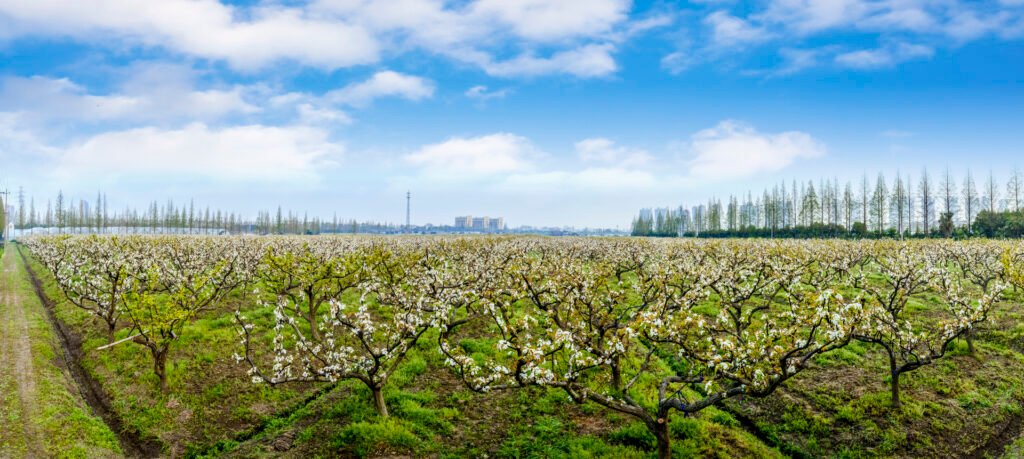
- Minimize runoff in orchards and open fields
In water-scarce regions, a reduction of 20–40% in total applied water is often realistic. Over multiple seasons, this can be decisive in meeting regulatory limits and maintaining production.
8.2 Yield and Quality
Better-controlled water and climate management:
- Reduces stress events that harm flowering, fruit set, or leaf development
- Decreases disease pressure by managing humidity and leaf wetness
- Improves calcium uptake and reduces disorders like blossom-end rot (in tomatoes and peppers)
This can translate into:
- Higher percentage of top-grade produce
- More uniform harvest timing
- Reduced rejection rates from buyers
Even a 5–10% increase in marketable yield can have a greater economic impact than water savings alone, especially for high-value crops.
8.3 Labor Savings and Workforce Optimization
Automation does not necessarily mean fewer people; it more often means:
- Less time on repetitive manual tasks (valve opening, recording readings, climate adjustments)
- More time on higher-value activities – scouting, strategy, training, and quality management
For many farms, this answers a pressing problem: they cannot find enough reliable labor at peak times. Automation lets them run sophisticated operations with smaller, better-trained teams.
8.4 Risk Management and Predictability
Perhaps the biggest but least visible impact of smart systems is reduced risk:
- Early alerts on pump failures or blocked filters prevent field damage
- Climate deviations are corrected before crops experience stress
- Season-to-season variability shrinks, making contracts and planning more reliable
This risk reduction has real financial value — in insurance, in contracts with buyers, and in the farmer’s ability to invest confidently.
From Open Fields to High-Tech Indoor Farms: Wewin’s Application Spectrum
Wewin’s integrated systems can be applied across a wide range of farming environments:
Open-Field Farms
- Drip or sprinkler irrigation
- Center pivot integration (where applicable)
- Soil moisture-based scheduling
- Block-level control for orchards and vineyards
Simple and Medium-Tech Greenhouses
- Plastic tunnels, shade houses, and basic structures
- Automated irrigation and climate controls
- Gradual upgrade path without replacing entire infrastructure
High-Tech Greenhouses
- Glasshouses with full climate systems
- Integration with advanced fertigation and energy systems
- Multi-zone control and detailed data analytics
Vertical Farms and Indoor Facilities
- Multi-layer hydroponic production
- Integration of lighting, HVAC, irrigation, and nutrient automation
- Data-driven “recipes” for different crops and growth stages
In all these cases, Wewin’s goal is the same: to deliver systems that are robust, scalable, and adapted to the real operating conditions of farms.
Sustainability and ESG: Beyond Marketing
Sustainability in agriculture is often discussed in abstract terms, but operationally it boils down to:
- Using fewer resources per unit of output
- Reducing negative environmental impacts
- Improving long-term soil and ecosystem health
Wewin’s solutions contribute directly in three measurable dimensions:
Water sustainability
- Increased efficiency lowers pressure on local aquifers and rivers.
- Data records support compliance with water-use regulations and reporting.
Energy and carbon footprint
- More efficient pumps and climate control reduce energy consumption.
- Optimized HVAC and lighting strategies in vertical farms can significantly cut kWh per kg of produce.
Chemical use and runoff
- Precise fertigation reduces nutrient losses to the environment.
- Better climate and irrigation control can reduce disease pressure, potentially enabling lower pesticide use.
For growers selling into export or premium markets, the ability to document these improvements is increasingly valuable.
Implementation Approach: From Assessment to Ongoing Support
A successful smart agriculture project is not just about buying hardware. It’s about design, integration, training, and continuous optimization.
An implementation with Wewin typically includes:
Needs Assessment and Design
- Site analysis: climate, water source, power, connectivity
- Crop analysis: type, varieties, planting density, seasonality
- Irrigation or climate objectives: yield targets, quality, resource constraints
System Design and Engineering
- Choice of sensors, controllers, and communication technologies
- Layout design (valve groups, sensor placement, control panel locations)
- Integration with existing infrastructure where possible
Installation and Commissioning
- Physical installation of equipment
- Calibration of sensors and initial control parameters
- Testing of alarms, fail-safes, and backup modes
Training and Handover
- Training farm staff on system operation and basic troubleshooting
- Shared understanding of irrigation or climate strategies
- Documentation and user manuals in the local language when feasible
Monitoring and Optimization
- Periodic performance reviews based on data logs
- Adjustment of control parameters as crop cycles and experience accumulate
- Optional remote support and software updates
The emphasis on long-term partnership matches the “We Win” philosophy: Wewin’s success depends on customers achieving stable, measurable improvements over time.
Positioning Wewin in the Global Smart Agriculture Ecosystem
Wewin operates in a global ecosystem of agtech providers, equipment manufacturers, and integrators. Its distinctive strengths are:
- Integrated solutions rather than isolated components
- Focus on practicality, reliability, and field-tested designs
- Support for a wide spectrum of production environments
- Commitment to water and resource efficiency as core outcomes
As smart agriculture evolves, the industry is shifting from single-point tools (one sensor, one controller) toward platforms that connect entire operations:
- Irrigation scheduling informed by climate data
- Fertigation linked with crop stage and yield targets
- Greenhouse climate integrated with energy management
- Vertical farm control linked to production planning and supply chain
Wewin’s integrated approach positions it well to support farms as they progress along this digital transformation path.
Practical Considerations for Farmers Evaluating Smart Systems
For growers or agri-business managers evaluating smart agriculture investments, a straightforward framework can help:
Define objectives clearly
- Is the main driver water savings, yield improvement, labor reduction, or compliance?
- Rank objectives so the system can be optimized accordingly.
Start with high-impact areas
- Often irrigation automation and basic climate control provide the fastest payback.
- Additional layers (advanced fertigation, predictive analytics) can be added later.
Evaluate total cost of ownership (TCO)
- Include not just hardware, but installation, training, maintenance, and potential downtime.
- A robust system that avoids failures can be cheaper over time than low-cost equipment.
Assess support and service
- Is local or regional support available?
- Are spare parts and replacements accessible?
- Are software updates and security patches maintained?
Plan for change management
- Ensure key staff are trained and engaged.
- Adjust internal workflows to take advantage of automation.
- Use data actively in decision-making — not just for record-keeping.
Wewin’s solutions and service model are designed to address these elements, focusing on long-term efficiency and resilience rather than short-term gadget appeal.
Looking Ahead: The Future of Smart Agriculture and Wewin’s Role
By 2030, smart agriculture is likely to be standard in many medium and large-scale operations, and increasingly common even in smaller farms. Trends that will influence this trajectory include:
- More granular, plant-level sensing (e.g., imaging, sap flow, plant stress sensors)
- AI-driven decision support for irrigation, climate, and crop management
- Integration with supply chain systems for real-time demand and logistics alignment
- Stronger environmental and regulatory requirements pushing for documented resource efficiency
Wewin’s integrated, data-centric approach lays a foundation for these developments. By focusing on practical automation, robust hardware, and meaningful analytics, Wewin helps farms navigate the transition from traditional practices to highly efficient, technology-enabled agriculture.
Professional Q&A: Smart Agriculture, Wewin Systems, and Practical Implementation
Below are some professional-level questions and answers related to Wewin’s solution areas and the wider smart agriculture context.
Q1: How do smart irrigation systems like Wewin’s handle variability in soil type within a single field?
Soil variability is a major challenge in irrigation management. Wewin’s approach typically involves:
- Zoning the field: Dividing fields into irrigation blocks based on soil texture, topography, and crop patterns.
- Representative sensor placement: Installing soil moisture sensors in each major zone and, where necessary, at multiple depths.
- Block-specific control: Running each zone on independent schedules or thresholds, rather than one uniform schedule for the entire field.
- Data-driven refinement: Using historical performance (water use vs. yield) to refine zoning and thresholds over time.
In highly variable fields, additional sensors and more granular valve control can be justified, especially for high-value crops. The key is balancing sensor density and control complexity with economic returns.
Q2: What payback period can a commercial farm expect when investing in Wewin’s smart irrigation or greenhouse automation?
The payback period depends on water cost, crop value, labor cost, and current baseline practices, but typical ranges are:
- Smart irrigation in open fields: 2–5 years, assuming significant water savings and moderate yield gains. Faster payback where water and energy are expensive or regulated.
- Greenhouse automation: 3–7 years, depending on how much automation is added (irrigation only vs. full climate and fertigation integration). High-value crops like tomatoes, peppers, and berries often justify shorter payback periods.
For vertical farms and high-tech greenhouses, automation is not optional; it is integral to the business model. For these, the question is not whether to automate, but how to choose systems that are reliable, integrated, and scalable — areas where Wewin focuses.
Q3: How does Wewin’s system support farms in regions with unreliable internet connectivity?
Wewin designs systems so that critical control functions run at the edge, meaning:
- Greenhouse climate loops (temperature/humidity control, ventilation, etc.)
- Irrigation scheduling based on local sensors
- Basic alarms and safety functions
These are all executed by local controllers, not dependent on cloud connectivity. When internet is available:
- Data is uploaded for remote monitoring and analytics.
- Configuration changes and firmware updates can be pushed securely.
When disconnected:
- The system continues operating on local logic.
- Data can be buffered and later synced when connectivity returns.
This hybrid approach ensures continuous operation in rural or infrastructure-challenged regions, while still delivering the benefits of cloud-based visualization and support when possible.
Q4: How does Wewin’s vertical farming solution address energy efficiency, given that lighting and HVAC are major costs?
Vertical farms face high energy intensity; Wewin’s control solutions support efficiency by:
- Dynamic lighting control: Adjusting light intensity and photoperiod based on growth stage and daily light integral (DLI) targets. Supporting dimming and scheduling to reduce peak load charges, where allowed.
- Integrated HVAC and dehumidification control: Coordinating temperature, humidity, and airflow to avoid overcooling or over-dehumidification. Using sensors and control logic that minimize unnecessary equipment cycling.
- Data-based optimization: Logging energy consumption against yield and quality outcomes. Supporting iterative refinement of climate and lighting recipes to find the best “kWh per kilogram” balance.
Wewin’s role is not to supply LED or HVAC hardware itself, but to integrate and control these systems intelligently, maximizing the efficiency of existing equipment.
Q5: Can Wewin systems integrate with third-party farm management software or ERP platforms?
In many commercial contexts, data integration is crucial. Wewin systems are typically built on widely used industrial protocols and modern APIs, enabling:
- Data export (e.g., via REST APIs, MQTT, or standard file formats such as CSV, JSON, XML)
- Integration with third-party farm management, ERP, or traceability platforms
- Custom dashboards combining Wewin’s climate/irrigation data with financial or logistical data
For large-scale operations, Wewin or its partners can support custom integration projects, ensuring that automation data flows cleanly into broader digital ecosystems.
Q6: How do Wewin’s solutions support sustainable water management and regulatory compliance?
Wewin systems support sustainability and compliance by:
- Measuring and logging water use per block, greenhouse, or vertical farm zone.
- Generating reports showing water applied over time, which can align with regulatory or certification documentation requirements.
- Enabling precision irrigation, which reduces overall consumption and helps farms stay within allocations or quotas.
In regions with strict water rights and mandatory reporting, this level of documentation can be a significant operational advantage, not just a technical feature.