Container vertical farming is one of the main forms of indoor farming, and it has been growing quickly around the world in recent years. Beyond container farming, indoor farming also includes hydroponics, aeroponics, aquaponics, and other approaches. Each has its own characteristics and ideal use cases. Below, we focus mainly on container vertical farming and talk about its core technology and equipment needs.
From communities inside the Arctic Circle to desert regions, this technology is changing how fresh vegetables are grown. This overview is for growers who are considering this direction.
Why container farming is gaining traction
In places with long winters, traditional farming is nearly impossible for much of the year. Food has to be shipped in from far away, which drives up prices and hurts freshness. In water-scarce regions, conventional agriculture uses more water than can be sustained. At the same time, consumers are asking for fresh, pesticide-free food, and there is growing concern about supply chain reliability. All of these factors are pushing container farming from a concept into real commercial operation.
The main advantage of a container vertical farm is that the growing environment is completely controlled. It can produce food year-round even in extreme climates, uses only 5-10% of the water that traditional farming requires, needs no pesticides, and can be set up anywhere with access to electricity.
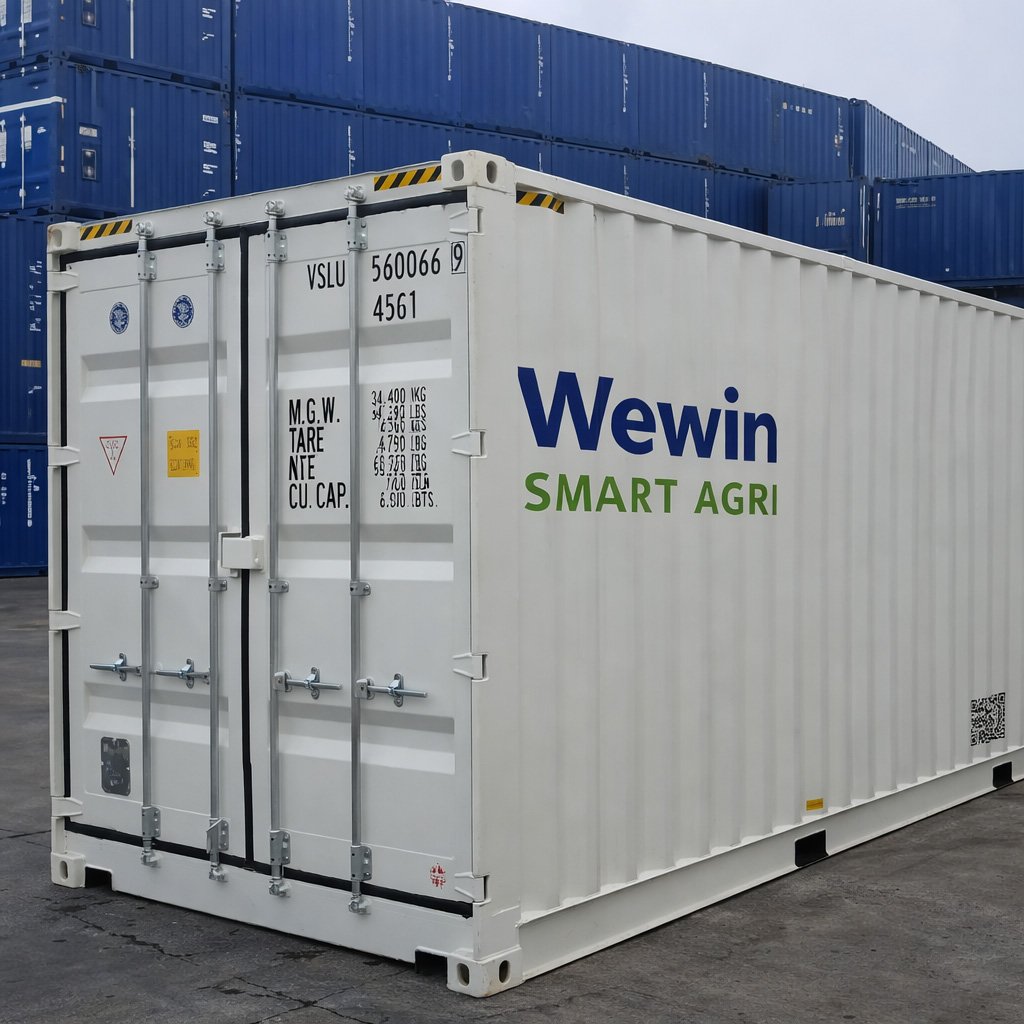
Main technology approaches in the industry
Looking at projects that have already been built around the world, container farms typically use a few key technologies.
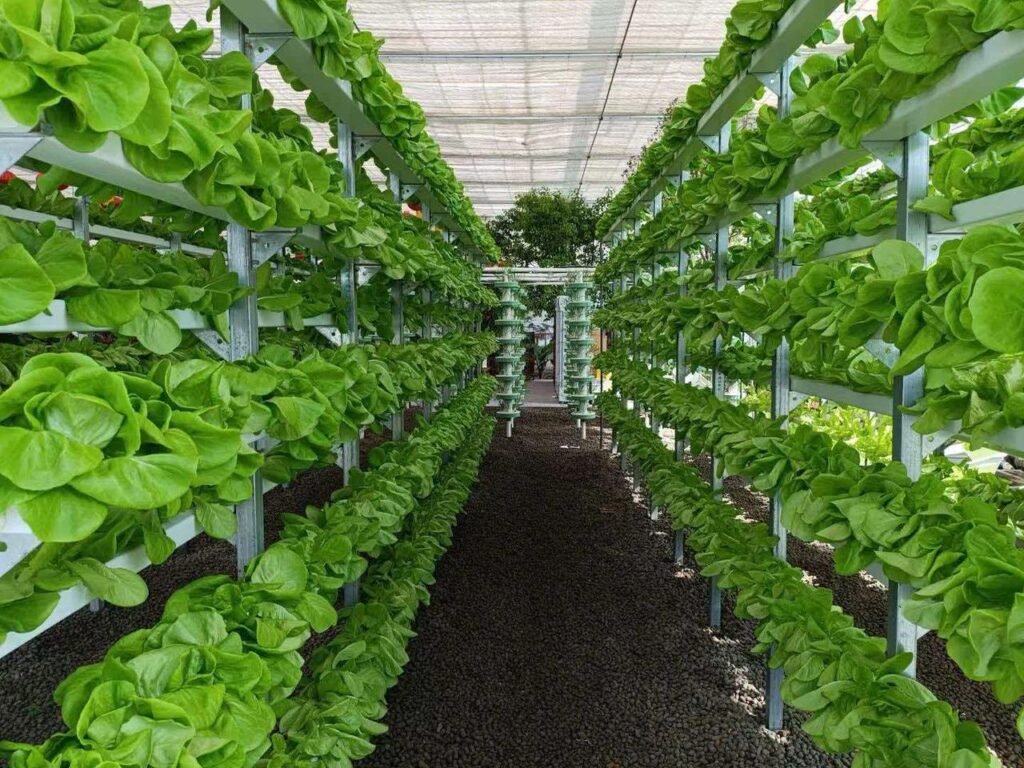
A fully insulated structure is the foundation. It can handle temperatures from -40°C to 45°C, so the equipment runs reliably whether it’s very cold or very hot. Multi-layer growing racks make use of vertical space, pushing yield per square foot to more than 40 times what traditional farming can achieve.
For lighting, full-spectrum LED lights replace natural sunlight. The intensity can be adjusted to match different crops and different growth stages. Instead of soil, hydroponic or aeroponic systems are used. This eliminates soil-borne diseases and makes true pesticide-free production possible. This is actually something that different forms of indoor farming have in common – hydroponics, aeroponics, container farms, and plant factories all share similar logic when it comes to environmental control and lighting.
A smart climate control system manages temperature, humidity, and CO₂ levels. It also controls fans, heaters, and dehumidifiers to keep the growing environment stable. All of the data comes together on a remote monitoring platform, so growers can check in from a phone or computer and respond to alerts as needed.
Core equipment needed
A mature container farm typically requires the following core equipment:
- Smart climate control system – This is the brain of the operation. It automatically adjusts temperature, humidity, and CO₂, and controls fans, heaters, and dehumidifiers to keep conditions optimal.
- LED grow lights – These provide full-spectrum light that mimics the sun. The intensity is adjustable, so different crops and growth stages get the right amount of light. This replaces natural sunlight and enables year-round production.
- Smart fertigation system – This handles nutrient mixing and delivers the right amount at the right time to each growing rack. It supports remote control and automatic operation.
- Sensor array – Sensors monitor water temperature, EC, pH, dissolved oxygen, and air temperature and humidity in real time. This data is the foundation for precise environmental control.
- IoT management platform – All data is stored in the cloud. Growers can check remotely from a phone or computer, receive alerts, analyze historical data, and control equipment from anywhere.
- Off-grid energy system – For remote locations without grid access, a wind-solar hybrid system with lithium battery storage can be added to run the farm independently.
Where container farms are being used
Looking at real projects around the world, container farms have already proven themselves in several different scenarios.
In extreme climates, such as communities inside the Arctic Circle or in desert regions, this technology has solved long-standing problems with fresh vegetable supply. In remote communities, including islands, mining sites, and indigenous settlements, container farms have cut down food transport distances significantly and lowered costs.
Around the edges of cities, new models are emerging like community-supported agriculture and direct-to-restaurant supply. Schools and non-profit job training programs also use container farms.
What these projects show is that container farming is no longer just a concept. The technology is mature, and the economics have been validated.
Conclusion
If you are thinking about investing in indoor farming, whether container vertical farming or other forms like hydroponics and aeroponics, we can talk through your specific needs. This includes project feasibility assessment, equipment configuration design, climate control systems, fertigation and sensor equipment, and IoT monitoring platforms. Everything can be customized for your situation.
Contact us to get a solution tailored to your project.