Indoor Plant Factory Lab for Schools and Study Tours in Agri-Tech Education
We designed this indoor plant factory lab as a STEM agriculture education solution for primary and secondary schools. It provides a complete hands-on learning system covering the entire growing cycle from seed to harvest.
The lab includes a germination chamber, seedling module, growing module, and a central control system. The germination chamber uses a microcomputer to manage temperature and humidity. You can set different conditions for different seeds, improving both germination rates and sprouting speed.
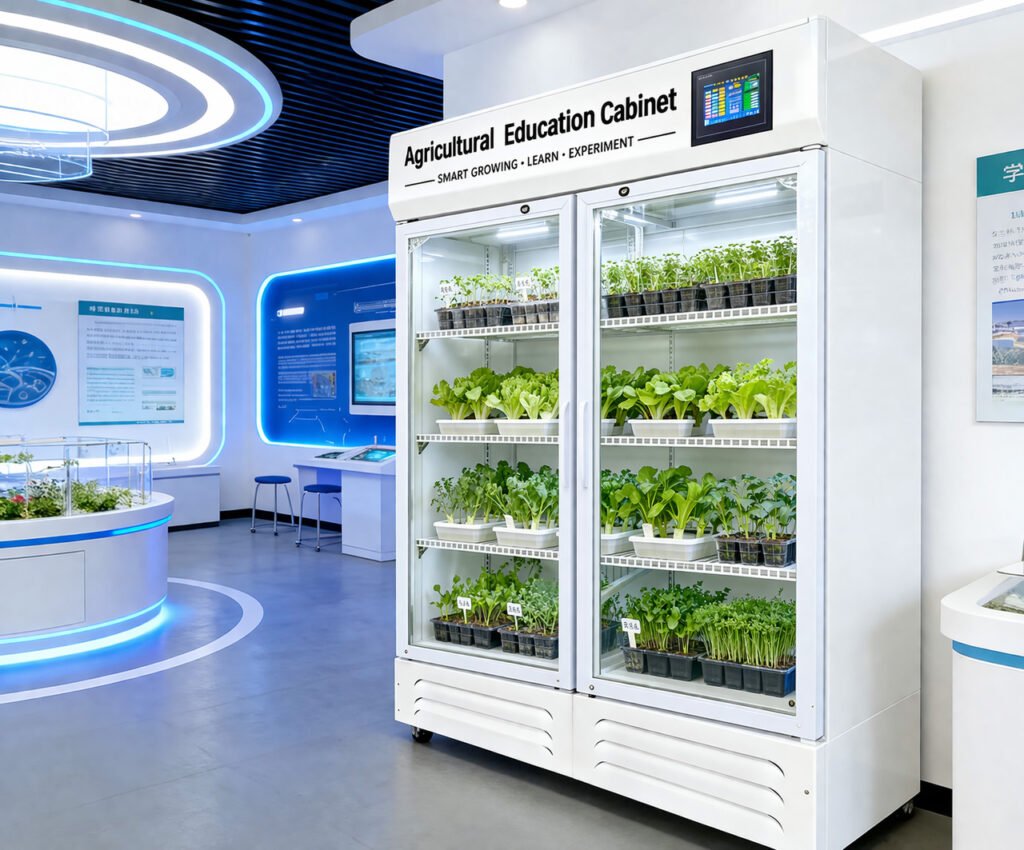
The seedling module handles up to 1,500 seedlings at a time. It comes with timed spraying, extra lighting, and automatic water circulation. This gives young plants a stable environment to grow.
The growing module is built with an aluminum alloy frame. It has timed lighting, airflow ventilation, and automatic nutrient circulation. You can also control it remotely over the network. That makes it easy for teachers to use in a classroom setting.
The central control system is the brain of the lab. It uses IoT sensors to collect data on temperature, humidity, CO2, and nutrient solution EC and pH levels. The system adjusts lighting automatically, manages nutrient dosing, and sends alerts when something is off. Students can see all this data in real time and understand how smart farming actually works.
We also use a growing substrate called π-soil. It’s made from coconut coir, humus soil, pine bark, and agricultural waste. It holds water well, lets air pass through, and gives roots something to hold onto. It’s also sterile, environmentally friendly, and has no smell. That makes it a good fit for indoor classroom use.
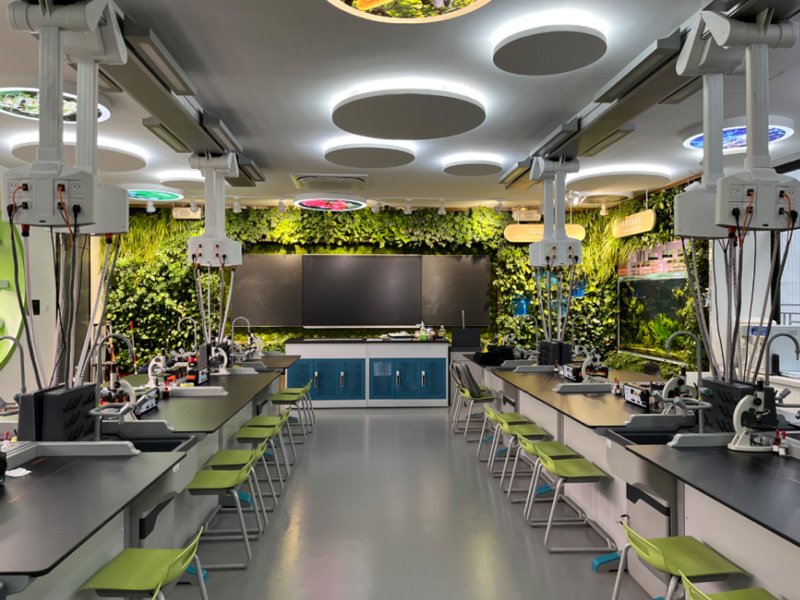
Students take part in every step. They set the germination parameters based on what seeds they’re using. They watch the seeds sprout in the seedling area. They transplant the seedlings and use the control system to adjust the environment. And in the end, they harvest the vegetables themselves.
Through this process, students learn about plant growth cycles and how light, water, and nutrients affect plants. They also pick up the basics of soilless cultivation. They’re not just reading from a textbook. They’re actually doing it.
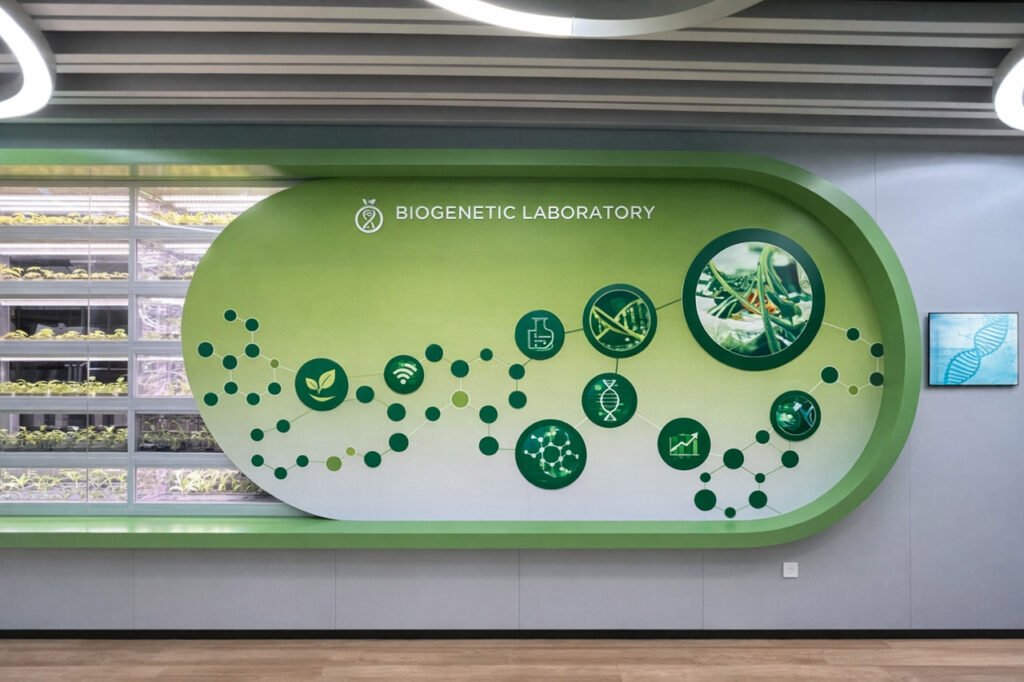
The lab works well for science classes, biology lessons, and environmental studies. It also fits into labor education programs. If needed, we can provide curriculum materials to go with the equipment.
This setup is ideal for K-12 schools, science centers, agricultural vocational schools, after-school STEM agriculture education, and study tour bases.
Interested in setting up an agri education lab? Contact us for a quote or to talk about curriculum support.