
For a B2B soil monitoring project, the procurement challenge is matching the probe, data logger, communications and delivery documentation. This guide helps distributors, irrigation installers and agricultural IoT integrators compare suppliers using a written requirement list and a sample acceptance test.
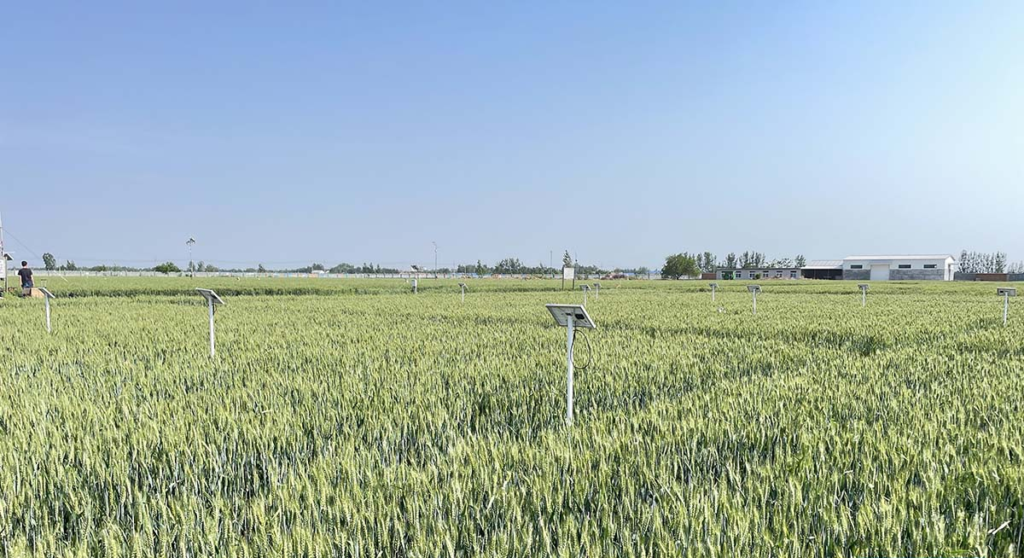
Using soil monitoring as an example, the steps below move from requirements to component screening, integration tests and pilot acceptance. They are a procurement framework, not a report of completed Wewin projects.
Technical Fundamentals of Soil Temperature, Moisture and EC
Distinguish soil water content from air relative humidity. Soil temperature probes measure the local root-zone temperature; air humidity probes measure water vapour in air and are not substitutes for soil water-content probes.
Ask whether the moisture device measures volumetric water content or soil water tension. For water-content probes, request the measurement method, calibration basis and units. Soil texture, salinity, temperature and installation contact can affect interpretation. A digital output does not mean calibration checks are unnecessary.
EC describes electrical conductivity. Confirm whether the value is bulk soil EC, pore-water EC or an extract measurement before comparing it with agronomic limits. A combined moisture, temperature and EC probe does not automatically include pH or independently validated plant-available nitrogen, phosphorus and potassium.
For placement and calibration considerations, see the University of Minnesota Extension guide to soil moisture sensors.
Compare soil sensor configuration options, then check the 3-in-1 soil probe specification for the selected three-parameter model.
Break Down Your Requirements First
Before contacting suppliers, spend half a day clearly defining your requirements. The more specific the information you provide, the more relevant the supplier’s response will be. The following figures are illustrative requirements, not Wewin specifications, guaranteed battery life or universal installation depths.
| Requirement Dimension | Key Questions | Example (Soil Monitoring) |
|---|---|---|
| Monitoring Parameters | What parameters need to be measured? | Soil temperature, volumetric water content, electrical conductivity (EC) |
| Measurement Range | What is the range? Accuracy requirements? | Temperature: -20°C to 60°C, ±0.5°C accuracy; Moisture: 0-100%, ±3% accuracy; EC: 0-20 dS/m, ±5% accuracy |
| Burial Depth | Shallow or deep? | Three layers: 10cm, 20cm, 40cm |
| Power Supply | Battery or solar powered? | Battery powered, low power consumption, 1+ year battery life |
| Output Interface | Analog? RS485? SDI-12? | RS485 Modbus for easy connection to data loggers |
| Communication Method | NB-IoT? LoRa? 4G? | NB-IoT (adequate farm signal coverage, low power consumption) |
| Operating Environment | Waterproof rating (IP Code)? Corrosion resistance? Corrosion resistance? | IP68, long-term burial, salt-alkali resistant |
| Certification Requirements | Metrology certification? Third-party test reports? | Third-party calibration report required |
| Procurement Volume | First batch quantity? Annual volume? | First batch: 100 units, Annual: 500-1000 units |
Once you complete this table, your requirements become clear. Suppliers can immediately see if they are a good fit.
Should Sensors and Communication Modules Be Sourced Separately or as a Package?
There are two procurement approaches for soil monitoring projects:
Separate Procurement:
Purchase soil moisture sensors from one manufacturer and source the data logger/communication modules from another supplier, then handle the integration yourself.
Package Procurement:
Work with a manufacturer that can provide an integrated solution combining sensors, data loggers, and communication modules.
Comparison of the Two Approaches
| Approach | Advantages | Disadvantages | Best For |
|---|---|---|---|
| Separate Procurement | Best-in-class for each component, cost controllable | High integration effort, possible interface/protocol mismatches | Teams with R&D capabilities, deep customization needed |
| Integrated Solution Procurement | Coordinated components and a single support window; integration still requires validation | Individual components may not be best-in-class, potentially higher price | Tight project timelines, prefer to avoid integration complexity |
For small and medium-sized projects, it is recommended to work with an integrated solution provider first to accelerate prototyping and deployment. If annual demand is high and in-house R&D capabilities are available, separate procurement can then be considered to reduce costs.
How to Evaluate Soil Moisture Sensor Suppliers
After shortlisting three candidate suppliers, start narrowing down the options.
First Round: Qualification Screening
| Evaluation Item | Requirement | How to Check |
|---|---|---|
| Company Age | ≥2 years | Ask the sales representative |
| Industry Experience | Has agricultural project cases | Check website case studies or ask sales |
| Certifications & Reports | Third-party calibration report, IP68 test report | Request scanned copies |
| Production Capacity | Monthly output? Can it meet your volume? | Ask the sales representative |
| Factory Location | Convenient for inspection or after-sales support | Check “Contact Us” on website |
Second Round: Sample Testing
Obtain 3–5 sample units for testing and focus on the following aspects:
Accuracy and Stability: For moisture, compare against an agreed reference water-content method in representative soil; compare temperature against a reference instrument. Use conductivity standards only where the EC model’s manual specifies that method. Record the accuracy basis and test conditions.
Consistency: Test multiple units of the same model using the same soil sample and evaluate the variation in readings.
Response Time: Measure how long it takes for readings to stabilize after insertion into the soil.
Power Consumption: Check operating current and sleep current to estimate battery life.
Durability: Use a pilot covering representative wetting, drying and operating conditions. A one-week burial check cannot establish long-term drift or service life.
Third Round: On-Site Audit (Optional)
If the purchase volume is large, an on-site factory visit is worthwhile. Inspect the production line, testing equipment, and aging test facilities. For IP68, request the model-specific report and its stated immersion conditions. A sales explanation alone is not a substitute for an applicable test report.
How to Evaluate Communication Module Suppliers
Evaluate communications against the destination network and the receiving system. Confirm cellular bands and SIM requirements for a cellular device. For radio nodes, confirm the local frequency version and whether they use a private LoRa protocol or LoRaWAN.
Communication Module Evaluation Table
| Evaluation Item | Key Questions |
|---|---|
| Carrier Compatibility | Does it support local mainstream networks? (Check exact bands, network technology, operator coverage and SIM provisioning in the destination country) |
| Power Consumption | Is the device power-efficient? How long does the battery last? (Pay attention to sleep mode current) |
| Protocol Support | Can it connect to mainstream IoT cloud platforms? (e.g., AWS IoT, Azure IoT, ThingsBoard) |
| Form Factor / Size | Does the size match your data logger’s PCB? |
| Certifications | Does it have the documents applicable to the destination and exact hardware? Does it have local market access certifications? (e.g., US FCC, EU CE) |
| Production Capacity | Can delivery be guaranteed for large-volume orders? |
It is recommended to select communication modules from mainstream, well-established manufacturers with proven market adoption. These products generally offer competitive pricing, stable quality, and reliable after-sales support. Unless there are specific customization requirements, it is not advisable to take risks with products from smaller manufacturers that have not been thoroughly validated.
How to Evaluate Integrated Solution Providers
If you are looking for a supplier that can provide an integrated solution combining sensors, data loggers, and communication modules, the evaluation criteria should be more comprehensive.
Integrated Solution Provider Evaluation Table
| Evaluation Dimension | Key Questions |
|---|---|
| Solution Maturity | Can they provide specific case studies, project timelines, and customer feedback? |
| Sensor Configuration | Are sensors manufactured in-house or sourced externally? If sourced, is the source reliable? |
| Communication Options | Which protocols are supported (NB-IoT/LoRa/4G)? Can they be configured as needed? |
| Platform Integration | Is a standard API provided? Can it integrate with mainstream third-party platforms? |
| Power Consumption | How long does the entire device battery last? Is it easy to replace the battery? |
| Installation & Maintenance | Is on-site installation complex? How fast is after-sales support response? |
| Pricing Structure | How much is the hardware? Is there an annual platform fee? Are there any hidden costs? |
Sample testing for integrated solution providers should not focus solely on the sensors. The stability of the entire system must be evaluated end-to-end—from sensor data acquisition, module transmission, and platform reception to data visualization—ensuring that the complete workflow operates reliably.
A Quick Supplier Evaluation Checklist: Soil Monitoring Project Example
| Evaluation Dimension | Key Indicators | Weight | Scoring Criteria (1-5 points) |
|---|---|---|---|
| Product Fit | Parameter coverage, accuracy, interface | 25% | 5 points: ≥90% requirement match; 4 points: ≥75%; 3 points: ≥60%; 2 points: ≥50%; 1 point: <50% |
| Quality & Certification | Third-party reports, IP rating, stability | 20% | 5 points: Complete reports, stable in testing; 4 points: Basic reports available; 3 points: Core reports available; 2 points: Some missing; 1 point: No reports or unstable in testing |
| Industry Experience | Number of agricultural cases, customer reputation | 15% | 5 points: Large farm or government project cases; 4 points: Multiple small/medium projects; 3 points: A few cases; 2 points: Very few cases; 1 point: No agricultural cases |
| Delivery Capability | Production capacity, lead time, packaging | 15% | 5 points: Sufficient capacity, clear lead time; 4 points: Basically sufficient; 3 points: Average; 2 points: Risk of delay; 1 point: Unclear capacity or uncertain lead time |
| Price & Commercial Terms | Value for money, warranty, payment terms | 15% | 5 points: Transparent pricing, warranty ≥2 years, clear payment terms; 4 points: Warranty 1-2 years; 3 points: Warranty 1 year; 2 points: Warranty unclear; 1 point: No warranty or opaque pricing |
| Technical Support | Pre-sales response, after-sales service | 10% | 5 points: Timely response, clear after-sales process; 4 points: Fast response; 3 points: Average response; 2 points: Slow response; 1 point: No clear after-sales support |
Scoring Criteria:
Total Score Above 80: Eligible for pilot procurement
Total Score Between 75 and 80: Requires further observation
Total Score Below 75: Procurement should be postponed
Final Recommendations
Before a batch contract, agree on a sample or pilot quantity appropriate to the project. There is no universal minimum of 20–30 units. Deploy them in an actual farm environment and operate them for one growing season, or at least one month.
Evaluate whether the data remains stable, whether transmission is reliable, whether battery life is sufficient, and whether any issues occur during rainy conditions.
Agricultural projects are highly affected by environmental factors. Strong performance in laboratory testing does not necessarily guarantee reliable operation in the field. The cost of a small-scale pilot project is an investment in identifying potential issues before large-scale deployment.
Smart agriculture continues to evolve rapidly, and standards for soil monitoring are becoming increasingly standardized. When selecting suppliers, having the right evaluation method is more important than relying on luck.
B2B Sample Acceptance and Handover Checklist
Record the exact model and firmware, output units, wiring, sensor positions, reference method, agreed limits and test results. Request the terminal diagram, register map or analog scaling, radio configuration, calibration instructions and packing list. Confirm data ownership, export, subscription charges, spares and support scope if a platform is included.
Review the LoRa node and RS485 gateway specifications. Check its radio link and the sensor’s electrical supply separately. Choose a monitoring configuration or send your requirement list for model matching and a sample quotation.