Amid growing challenges such as soil degradation, water scarcity, and labor shortages, mushroom farming equipment is evolving rapidly as part of a new agricultural model — integrating clean energy and artificial intelligence to enable more efficient and sustainable production worldwide.
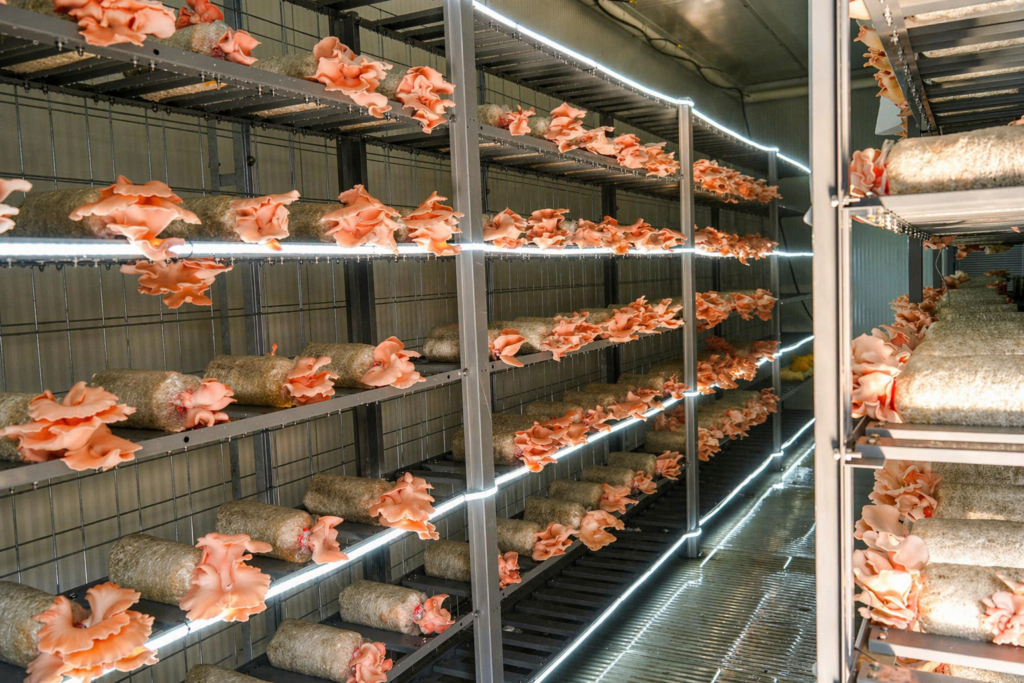
Inside modern smart agriculture facilities, rows of container-based mushroom growing units operate quietly yet efficiently. Within these controlled environments, layers of oyster mushrooms grow under precisely managed conditions. This is not only a combination of advanced heat pump technology and modern agriculture, but also a clear sign that farming is shifting from traditional “weather-dependent production” to a model that is controllable, scalable, and highly efficient.
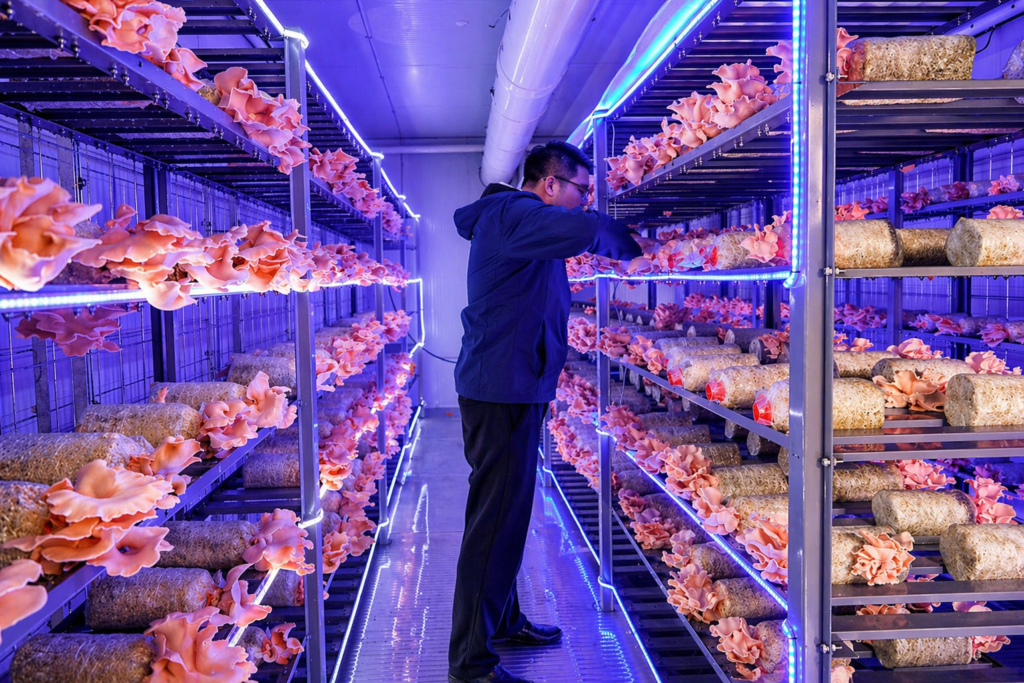
Inside the System: How It Achieves Stable, Energy-Efficient Production
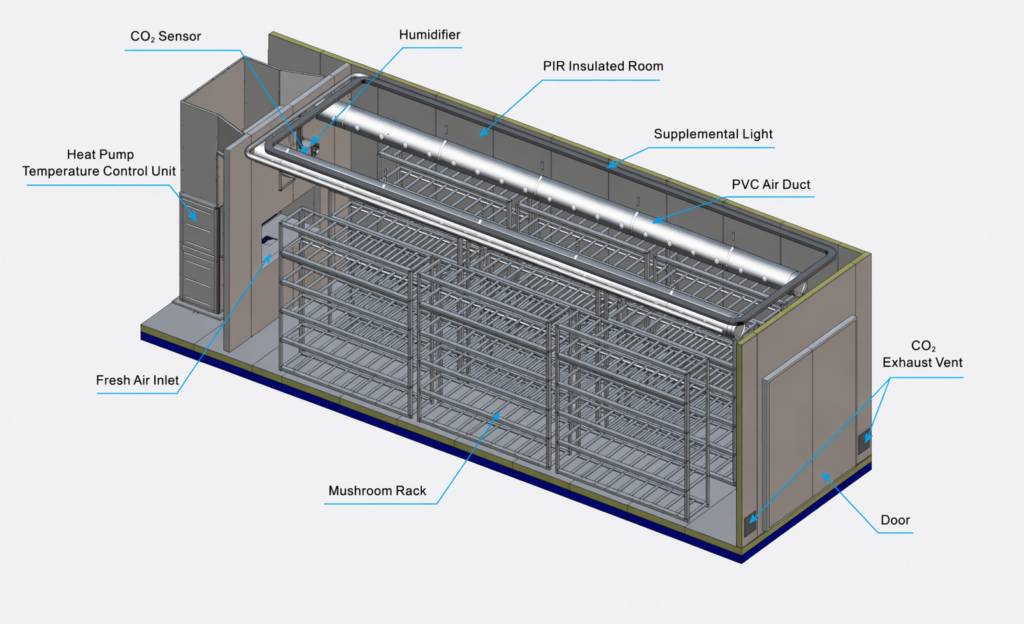
The smart mushroom growing container is built around three integrated systems that ensure stable production and energy efficiency.
Heat Pump Climate Control System
At the core of the system is a variable-frequency heat pump that maintains precise control over temperature, humidity, and airflow. This allows the internal environment to remain stable regardless of external weather conditions. Whether in cold northern regions or hot desert climates, the system can simulate optimal growing conditions for mushrooms, ensuring consistent production performance.
Solar-Powered Energy System
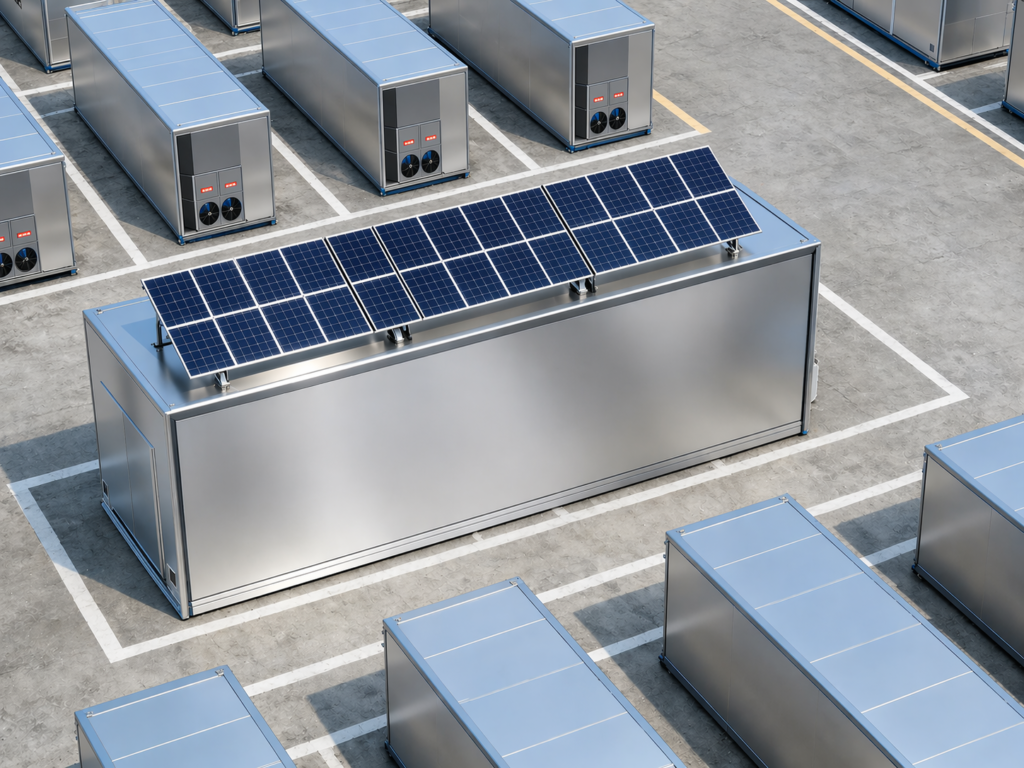
The integration of photovoltaic direct-drive technology enables the system to convert solar energy directly into operational power. Combined with DC inverter control, this significantly reduces energy consumption. In practical operation, the system can save approximately 30 kwh of electricity per day, lowering operational costs while supporting environmentally friendly agricultural practices.
This approach aligns with global trends in renewable energy adoption in agriculture.
AI Intelligent Control System
Equipped with multi-parameter sensors and adaptive algorithms, the system continuously monitors key environmental indicators such as temperature, humidity, CO₂ concentration, and lighting levels.
Through remote access via mobile or desktop platforms, users can monitor real-time data, adjust parameters, and control system operations at any time. This enables fully automated, unattended operation, reducing reliance on manual labor and improving management efficiency.
Even under extreme environmental conditions — from temperatures as low as -35°C to as high as 55°C — the system maintains stable performance, thanks to advanced low-temperature EVI technology. This makes it suitable for global deployment across diverse climates, including regions in Asia, the Middle East, and Africa.
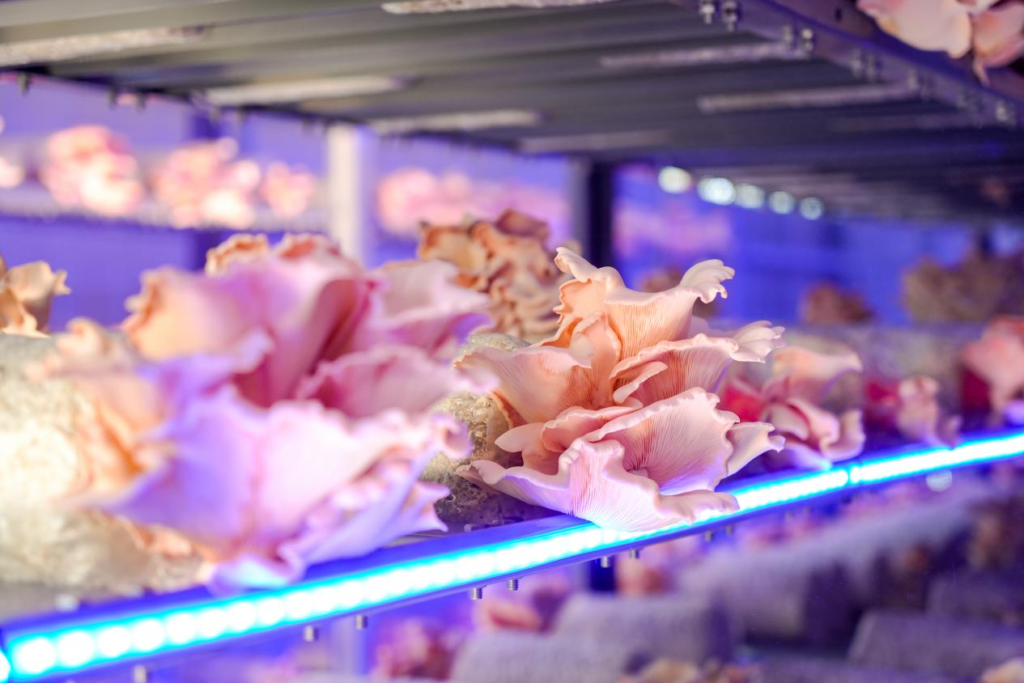
Economic Performance: How 30 m² Can Match 6 Acres of Traditional Farmin
A standard 30-square-meter container can deliver an annual output equivalent to approximately six acres of conventional greenhouse production, dramatically increasing land-use efficiency.
Taking oyster mushroom cultivation as an example:
- Annual output per container: approx. 24,000 kg
- Production cycle: continuous multi-cycle harvesting throughout the year
- Quality control: fully enclosed environment eliminates pests and diseases, enabling pesticide-free production with full traceability
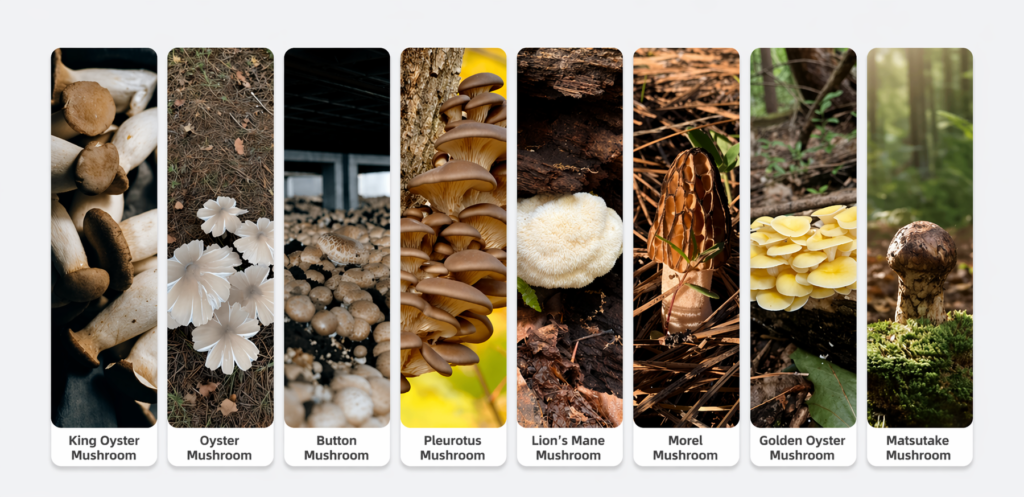
Beyond oyster mushrooms, the system supports a wide range of crops, including:
- High-value edible fungi: truffle, reishi, golden ear mushroom, lion’s mane
- Other high-efficiency crops: leafy greens, microgreens, and selected medicinal plants
From an investment perspective, this system delivers:
- Higher yield per unit area
- Reduced labor dependency
- Faster production cycles
It represents a high-density, high-turnover agricultural model with strong return potential.
Beyond Mushroom Farming Equipment: A New Agricultural Infrastructure
More than just a piece of mushroom farming equipment, smart mushroom farming containers represent a new form of agricultural infrastructure.
Modular and Rapid Deployment
The containerized structure allows for quick installation and relocation. It can be deployed in urban areas, remote regions, deserts, or areas with limited agricultural land, providing a flexible solution for modern farming needs.
Reduced Technical Barriers
With AI managing environmental control and operational decisions, users do not require extensive agricultural experience. This significantly lowers the entry barrier for new investors and enables faster project implementation.
Supporting Sustainable Agriculture
The closed and controlled production system reduces water usage, minimizes energy waste, and eliminates the need for chemical pesticides. This supports the development of sustainable and environmentally responsible agriculture while meeting increasing global demand for safe and high-quality food.
Conclusion: The Future of Controlled Agriculture
Modern mushroom farming equipment is transforming agriculture by combining intelligent control systems, renewable energy, and advanced environmental management.
It not only solves the limitations of traditional farming but also provides a scalable and commercially viable solution for global food production challenges. As controlled-environment agriculture continues to evolve, smart mushroom growing systems are becoming an essential part of the future agricultural landscape.
As mushrooms grow steadily inside these intelligent containers, they represent more than just a crop — they symbolize a shift toward a smarter, more resilient, and more sustainable way of farming.