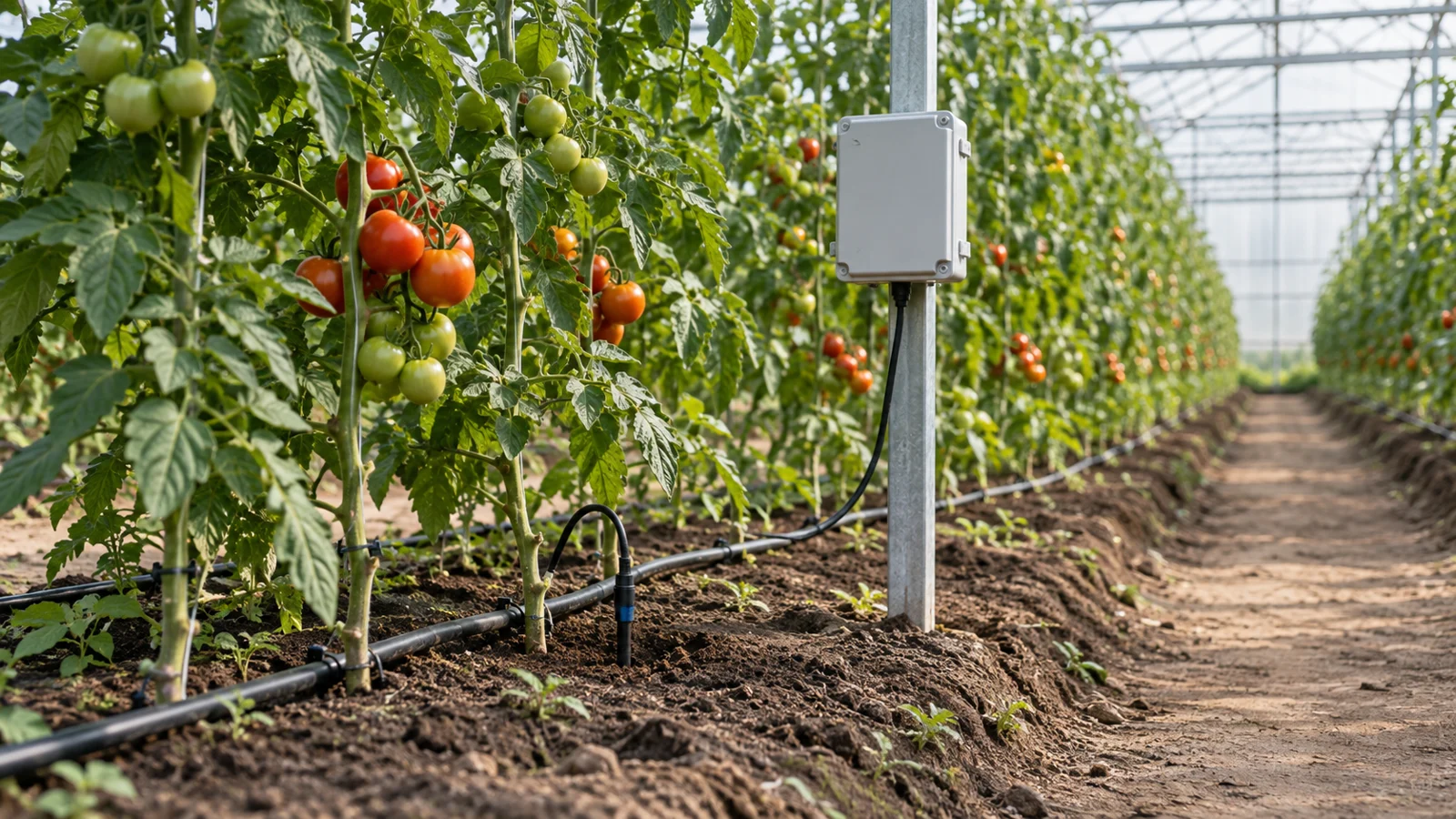
Smart agriculture IoT connects field measurements with decisions and equipment control. Its value depends on whether the system can turn trustworthy data into an appropriate action—and verify what happened afterward. A dashboard showing soil moisture is useful, but it does not confirm that an irrigation valve opened, water reached the intended zone, or the root zone received enough moisture.
For irrigation installers, equipment distributors and agricultural system integrators, this distinction matters when specifying a project. Sensors, gateways and controllers must work as a connected system, with clear responsibilities for calibration, communication, fault handling and maintenance. AI can support that system, but reliable measurement and control come first.
What a Smart Agriculture IoT Data Loop Should Include
A practical data loop has six stages: measure → validate → decide → act → verify → review.
Consider an illustrative irrigation sequence. A root-zone sensor reports declining moisture. The platform checks that the reading is recent and valid, then evaluates it against the approved irrigation strategy. A controller starts the selected zone. Flow and pressure measurements confirm water delivery, while subsequent soil readings show the root-zone response. The system records the command, delivered water and outcome for review.
This is an architecture example, not a Wewin customer case or a universal irrigation recipe. Thresholds, operating times and acceptable responses must be established for the crop, soil or substrate, hydraulic system and site conditions.
| Layer | Main responsibility | What the buyer should verify |
|---|---|---|
| Sensores | Measure soil, climate, water and equipment conditions | Measurement definition, range, calibration and placement |
| Gateway | Collect and transfer readings | Protocol compatibility, timestamps and offline buffering |
| Platform | Organize data, alarms and operating records | Units, quality flags, data export and access rights |
| Controlador | Execute approved operating logic | Electrical compatibility, interlocks and offline behavior |
| Feedback | Confirm delivery and response | Flow, pressure, equipment status and root-zone trends |
Select Sensors Around the Decision They Support
Start with the operating question, rather than a list of available devices. “When should this irrigation zone run?” requires different information from “Did the pump deliver the expected flow?”
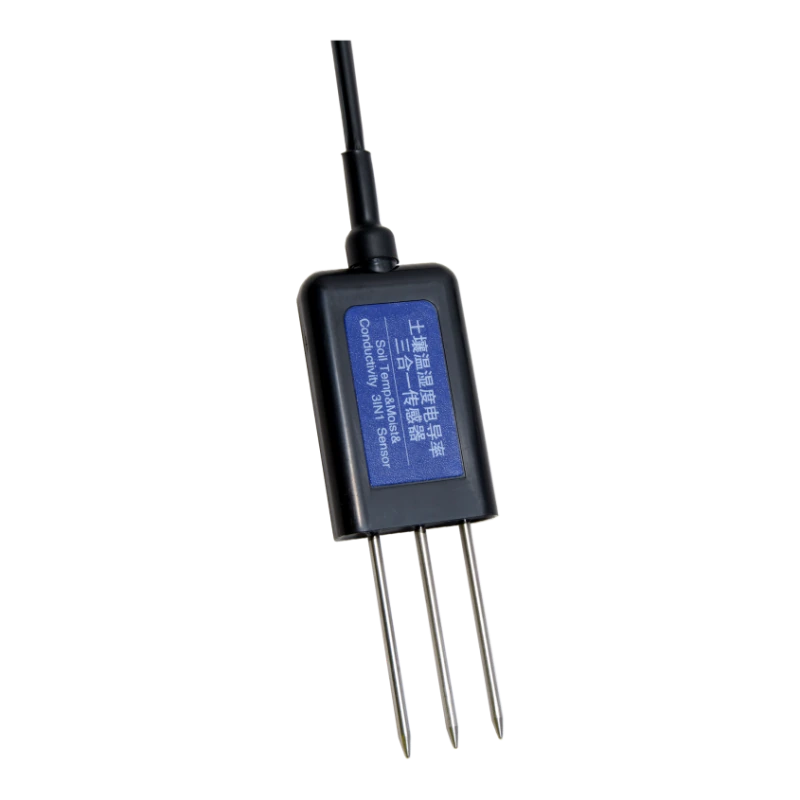
Root-zone moisture, temperature and EC
Soil moisture sensors can support irrigation scheduling, but the displayed percentage needs a defined meaning. Volumetric water content, gravimetric water content and a manufacturer’s relative moisture scale are not interchangeable. An undefined “soil humidity” value is a weak basis for control.
Dielectric sensors infer water content from electrical behavior. Soil properties, salinity, temperature and installation can affect the result. TDR and FDR are useful technology categories, but neither name alone guarantees better field accuracy. Compare performance under the intended conditions and verify the calibration method.
If checking a volumetric reading against a gravimetric reference, account for soil bulk density; the two percentages cannot simply be compared directly. Calibration may require a curve across several moisture levels, rather than a single offset. The technical study Evaluating Sensor Data Quality in IoT Smart Agriculture Applications provides a useful framework for treating data quality as part of the application.
Place probes within representative irrigation zones and at depths relevant to the active root zone. Soil texture, emitter position, terrain and crop development determine the layout. Fixed depths and a universal number of probes per greenhouse are not adequate specifications. For detailed hardware selection, see our soil moisture sensor guide.
EC adds information about electrical conductivity, but it does not identify individual nutrients or directly determine fertilizer dose. Specify whether the measurement is bulk soil EC, pore-water EC, extract EC or nutrient-solution EC. Interpretation depends on the measurement method and operating conditions.
Greenhouse climate and light
Air temperature and relative humidity should represent the relevant crop environment, with appropriate shielding and ventilation. An air sensor near the canopy does not measure leaf temperature. Large or uneven spaces may need separate monitoring zones; averaging every reading can conceal local extremes.
Match the light sensor to the task. Lux describes light weighted for human vision; broadband solar irradiance measures radiant power; PPFD measures photosynthetically relevant photon flux. Supplemental lighting decisions commonly use PPFD and daily light integral alongside crop-specific targets. Lux-to-PPFD conversion depends on the spectrum, as illustrated in Apogee’s technical conversion reference. These quantities should not share one generic “light intensity” field.
CO2 monitoring can support greenhouse management, but enrichment and ventilation should be coordinated with temperature, humidity, lighting and the approved growing strategy. A low reading alone is not sufficient to choose the appropriate response.
Water delivery and equipment feedback
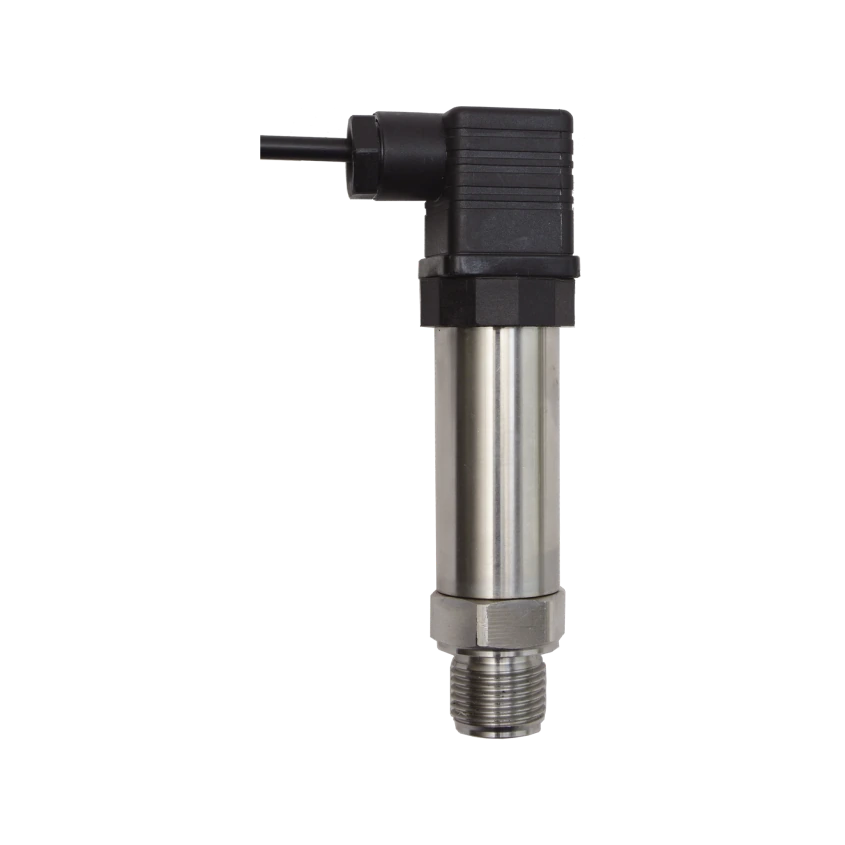
Root-zone measurements describe the growing environment. Flow meters, pressure sensors, tank-level sensors and actuator feedback help establish whether equipment delivered the intended action.
A valve command is not proof of water delivery. Flow without the expected pressure, or pressure without expected flow, can indicate a condition requiring investigation. Define acceptable combinations for the particular system instead of relying on one sensor to diagnose every fault.
For fertigation, solution pH and EC measurements support monitoring and control only when probe installation, calibration, mixing and response time are accounted for. They do not replace an approved nutrient recipe or water analysis.
Match Communication to the Site and Control Requirements
The communication design should distinguish sensor connections, local networking and internet backhaul.
| Connection | Typical role | Main checks |
|---|---|---|
| RS485/Modbus RTU | Wired sensors and controllers | Register map, addressing, baud rate, wiring and termination |
| LoRa or LoRaWAN | Small, intermittent field measurements | Exact protocol, regional radio configuration and site coverage |
| NB-IoT/LTE-M | Distributed cellular monitoring | Local operator support, bands, subscriptions and power demand |
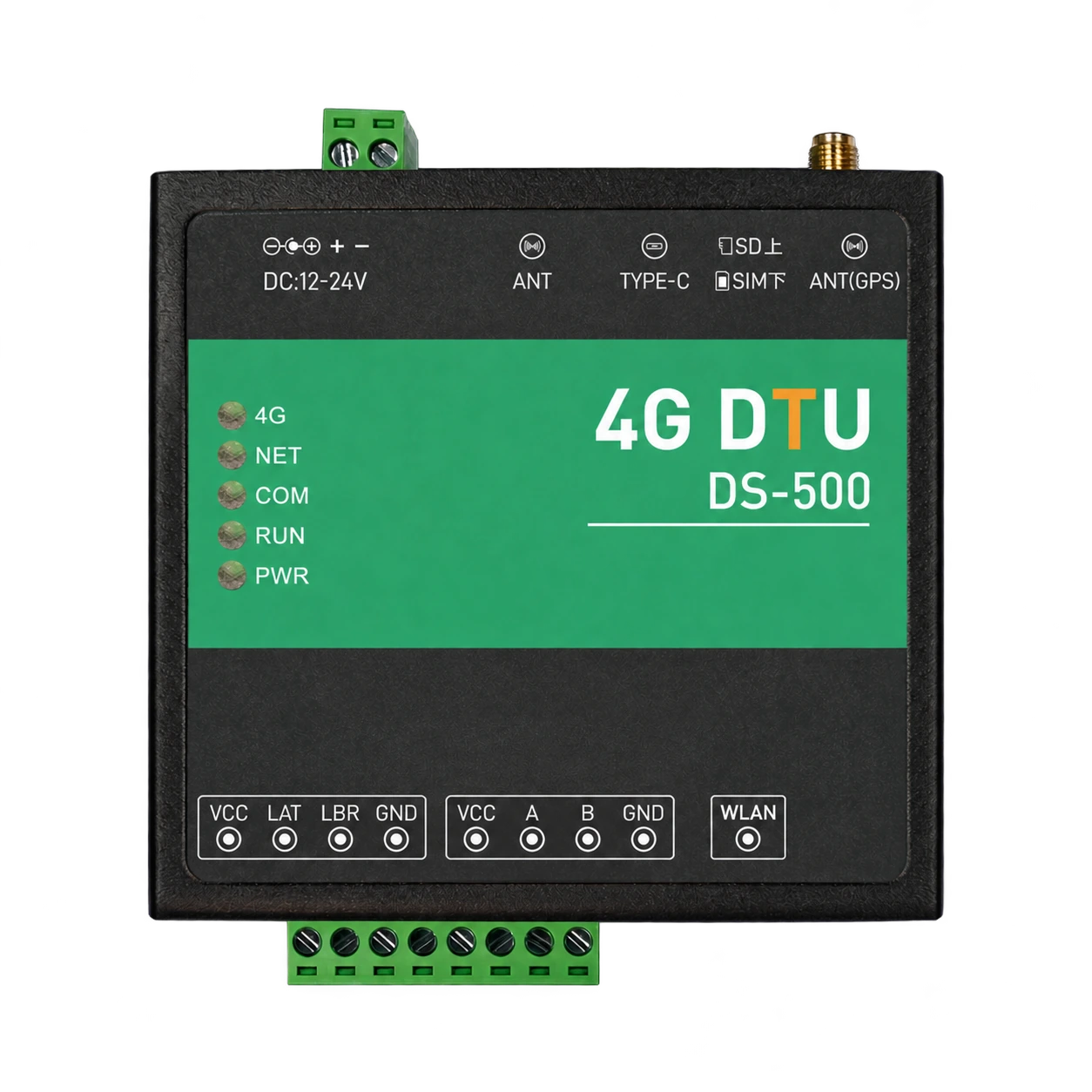
| 4G/LTE | Gateway backhaul or suitable higher-data applications | Modem capability, coverage, data plan and power budget |
LoRa describes radio technology; LoRaWAN defines a networking protocol. A proprietary LoRa node is not automatically compatible with a LoRaWAN gateway. Frequency plans and radio requirements also vary by region; use the LoRa Alliance Regional Parameters as a technical reference, together with current local requirements.
Do not accept a fixed transmission distance or battery-life claim without its test conditions. Terrain, antenna placement, reporting frequency, retries and sensor consumption affect the result. Likewise, a 4G sensor gateway is not necessarily capable of transmitting video.
For remote systems, size power in watt-hours at defined voltages, including measurement, sleep, communication and conversion losses. Use local low-sun conditions, battery limitations and the required recovery after cloudy periods. A solar-panel rating that merely matches average consumption may leave no practical recharge margin.
Make Data Usable Before Adding AI
Preserve the original measurements and attach quality information to processed values. An unusual reading should trigger investigation, not automatically disappear through filtering.
Rapid moisture increases can occur during irrigation or rainfall. Differences between nearby probes may reflect real variation in wetting patterns or soil conditions. Validation should therefore combine sensor limits with event records and site context.
Each reading should carry enough information to interpret it later:
| Data field | Why it matters |
|---|---|
| Device, channel and zone identifiers | Connect a reading with its location and equipment |
| Acquisition time and receipt time | Separate field events from delayed uploads |
| Value, unit and measurement basis | Prevent incorrect interpretation or conversion |
| Depth and calibration version | Preserve installation and processing context |
| Quality flag and processing history | Distinguish valid, suspect, missing and derived values |
| Supply voltage and communication indicators | Support fault investigation |
| Command and operation records | Connect decisions with delivery and outcomes |
Name a measured supply voltage as voltage, not “battery percentage,” unless a validated conversion exists. Define signal indicators by technology rather than treating every RSSI value as directly comparable.
Missing data should remain identifiable. Interpolation may help visualization, but an interpolated value should not silently become a fresh measurement used for automatic control. Gateways also need clear buffering and timestamp behavior when connectivity is lost.
Keep Agronomic Models, AI and Equipment Control Distinct
Crop-water models, predictive machine learning and language models serve different purposes. Established agronomic models can estimate water demand or track root-zone depletion. Machine-learning models can support prediction when representative data and validation are available. Language models can help explain records, retrieve documents and prepare reports.
Irrigation decisions still need agronomic context. FAO Irrigation and Drainage Paper 56, Chapter 8 describes root-zone water availability and soil-water balance. This helps explain why an isolated moisture percentage cannot define a universal irrigation threshold.
Retrieval-augmented generation can give a language model access to approved documents. Current sensor values should also come through structured data interfaces with units, timestamps and quality status. Retrieval does not establish causality, eliminate incorrect answers or replace validation. NIST’s Generative AI Profile identifies confidently incorrect generated content as a risk requiring management.
Use AI first for supervised interpretation and recommendations. Keep approved operating limits, pump protection, chemical-dosing interlocks and emergency actions in suitable control logic. Do not allow unrestricted generated text to operate equipment.
Commission One Complete Loop Before Scaling
Begin with a representative zone and agree acceptance criteria before purchasing a large batch.
- Validate measurements: check sensor identity, placement, units and reference comparisons.
- Test integration: verify the selected outputs, register maps, timestamps and scaling.
- Run supervised operations: record the decision, delivered water and subsequent response.
- Test failures: disconnect a sensor, interrupt communications and restart the controller; verify the documented behavior.
- Confirm ownership: assign responsibility for calibration, firmware, communications, maintenance and data access.
- Expand after review: compare results against agreed criteria and resolve faults before replicating the design.
Data requirements depend on the intended model and the variation it must handle. There is no universal rule that every project needs two or three years before it can use validated automation. Equally, a short successful pilot does not prove reliability across different seasons and sites.
Preguntas frecuentes
Can a sensor dashboard automatically control irrigation?
Only if it is connected to compatible control equipment and approved operating logic. Confirm actual water delivery and define behavior when measurements or communications fail.
Do all projects need soil moisture, temperature and EC sensors?
No. Specify each measurement around an operating decision. Some projects require all three; others need a simpler monitoring package or additional hydraulic feedback.
Should irrigation stop whenever the internet fails?
The correct response depends on the system and failure mode. Define offline operation, stale-data limits and manual recovery during commissioning. One default cannot safely cover every installation.
Does AI remove the need for calibration?
No. A model may detect inconsistencies, but biased measurements can still produce misleading recommendations. Calibration, placement and maintenance remain part of the system.
Specify a Practical Smart Agriculture IoT Package
A useful smart agriculture IoT project closes the gap between measurement and verified action. Start with a defined irrigation or fertigation task, select compatible equipment, and establish how the project will be tested and maintained.
To discuss component matching, sampling and a quotation with Wewin Smart Agri, provide the destination country, crop and growing medium, irrigation zones, required measurements, controller or platform details, communication method, power supply and estimated quantity. Include pipe size, flow and pressure requirements where water-control equipment is involved.
Browse our soil moisture, temperature and EC sensor máquinas de fertirrigación 4G RS485 agricultural gateway, or send your project requirements. Confirm each component’s configuration and interfaces before a batch order; supplying compatible hardware does not by itself validate an AI model or complete system design.