The vertical farming industry is entering a more realistic stage of development. The early investment boom portrayed it as a disruptive technology capable of transforming conventional agriculture. However, as companies expanded, energy costs rose and financing conditions tightened, the industry gradually recognised that successfully growing crops in a controlled environment and running an agricultural business that can remain profitable are two different things.
In recent years, several companies once regarded as industry leaders have gone bankrupt, entered liquidation or scaled back their operations. UK vertical farming company Jones Food Company closed and entered administration on 7 April 2025. In the United States, 80 Acres Farms announced in August 2026 that it would wind down operations. Another US microgreens grower, AeroFarms, announced in December 2025 that it would cease operations, but subsequently secured emergency funding and continued operating following the acquisition announced by an affiliate of Palm Ventures in June 2026.
These cases suggest that vertical farming is undergoing an adjustment similar to those seen in other advanced food technology sectors. Plant-based foods, cultivated meat and precision fermentation also experienced rapid inflows of capital and rising market expectations before moving into a stage focused on testing costs, scalability and business models.

Hiroki Koga, co-founder and CEO of Oishii, told FoodBev that the development of vertical farming resembles the ‘trough of disillusionment’ stage in the Gartner Hype Cycle. After an early period of excitement and high expectations, the market began reassessing the long-term viability of companies’ business models, and investors and operators became more pragmatic.
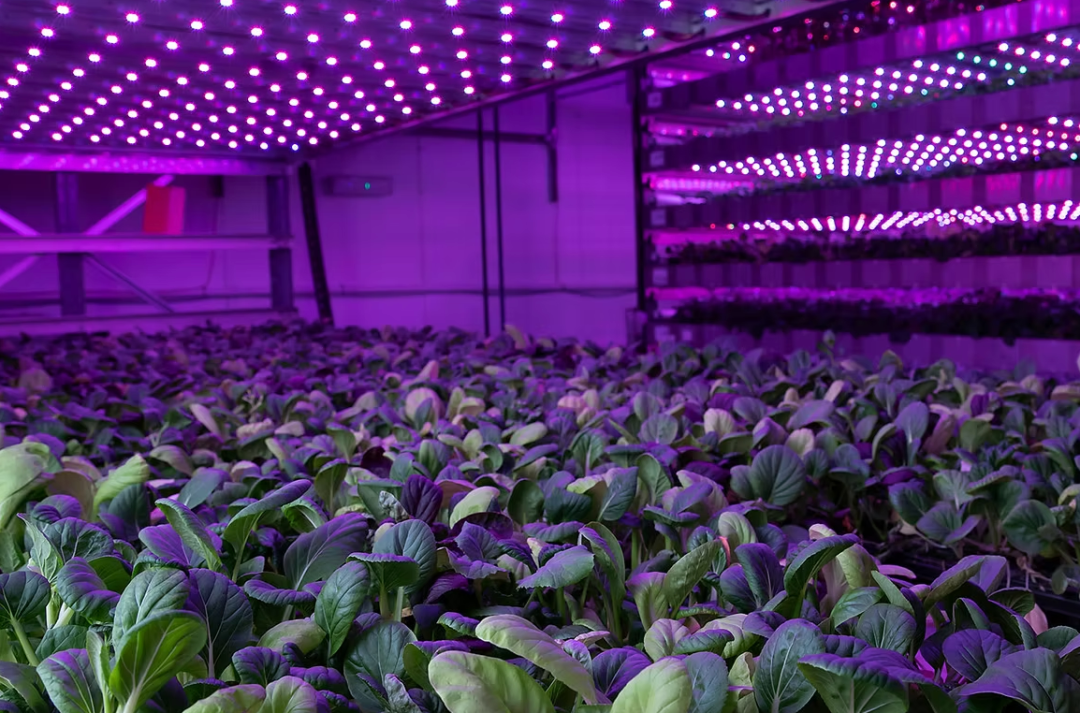
Indoor vertical farming typically involves growing crops in vertically arranged layers within a controlled environment, using hydroponics and other soilless cultivation techniques. Compared with conventional agriculture, this approach has the potential to reduce water and land use, cut waste and lessen dependence on climate and seasons. It can also avoid the use of pesticides. These potential environmental advantages helped drive the initial investment boom.
However, Martin Davalos, a partner at McWin Capital Partners, pointed out that several years ago, vertical farming was sometimes viewed as a universal solution capable of replacing much of conventional agriculture. Many investments were based on the assumption that production costs would fall rapidly as facilities scaled up, automation increased and technology improved.
In practice, some companies began building large facilities before adequately validating their unit economics, the fit between their crops and market demand, or the reliability of their operations. Rising energy prices and a worsening financing environment further exposed the weaknesses of these business models.
Technology Alone Is Not the Answer: How It Is Applied Matters
Artificial intelligence, IoT monitoring tools and smart sensors, and optimised LED lighting are helping vertical farms improve efficiency, reduce costs and enhance crop quality. However, industry participants believe that the real competitive advantage comes from integrating technology, scientific knowledge and operational processes, rather than simply having more advanced hardware.
Dave Scott, chief technology officer at UK vertical farming technology manufacturer Intelligent Growth Solutions, said that the greatest advances often come not directly from technology itself, but from the scientific understanding that guides its application. Much of the hardware used in controlled environment agriculture is already well established. The real challenge is integrating these systems and obtaining information that can guide practical decisions.
Growing businesses need to understand how crops respond to environmental changes and then use the resulting data to improve growing outcomes. McWin’s Davalos also noted that commercial success ultimately depends on coordination between biology, engineering, operations, procurement and sales, rather than the sophistication of any single technology.
When evaluating vertical farming start-ups, McWin therefore considers whether automation is built around a proven production process, whether the company has demonstrated its unit economics at a representative scale, and whether its chosen crops have sufficient value to support the costs of controlled environment production.
Investors should be cautious about companies that rely on optimistic electricity price assumptions, unproven yields or promises of major cost reductions that have yet to materialise. Committing substantial capital expenditure before establishing clear product-market fit and stable operations can also magnify business risks.
Crop Selection Determines the Limits of Commercial Viability
Oishii’s Koga believes that identifying the crops for which vertical farming can genuinely create value is fundamental to a company’s success. Whether the resulting products can compete on cost with conventionally field-grown crops will determine their prospects of reaching a wider market.
He divides the development of vertical farming into four stages. The first involves crops already grown in greenhouses, such as strawberries, lettuce, tomatoes and bell peppers. As smart farm costs decline, these crops could be among the first to see wider adoption.
Fruit trees could represent the next opportunity. Although growing fruit trees indoors currently involves high costs and long production cycles, future advances in plant dwarfing and selective breeding could produce peach or pear varieties better suited to controlled environment cultivation.
Root vegetables have relatively limited commercial appeal because they command lower prices and withstand long-distance transport more readily. Grains face an even greater challenge: although they may be relatively straightforward to grow, conventional field production is extremely inexpensive, creating a price advantage that is difficult to overcome.
Un analysis published in Plant Physiology estimated a minimum production cost based on electricity demand of around $10 per kilogram of dry plant matter for dried staple crops such as wheat, rye and barley grown through vertical farming. Conventional field-grown crops, by comparison, generally have farm-gate prices below $1 per kilogram. The high light requirements of grains also push up electricity costs.
Koga believes that fundamentally changing the economics of these crops would require a major breakthrough in energy. This is not a problem that can easily be resolved within the next five to ten years, but one that may require 30 to 50 years of technological progress.
Even leafy greens, a major focus for many vertical farms, do not automatically offer a cost advantage. Davalos noted that the economics can remain challenging when vertical farms compete directly with highly efficient open-field production or advanced greenhouses. The key question is not whether a crop can be grown vertically, but whether it can compete with the most efficient alternative production method in a particular region.
Oishii recently announced the first closing of $150 million in Series C financing. Koga said the company chose from the outset to focus on premium strawberries rather than expanding into multiple crop categories at once. Establishing consumer recognition through a high-quality product, then gradually improving production efficiency and lowering costs, has been an important part of its commercial strategy.
Reducing Costs Requires Coordination Between Energy, Automation and AI
The cost pressures facing vertical farming include energy, capital expenditure, labour and maintenance. Lighting and environmental control, including cooling, heating, ventilation and dehumidification, account for a substantial share of energy demand.
Davalos pointed out that businesses can lower costs through more efficient LED lighting, optimised airflow design, improved insulation, heat recovery, flexible operating schedules that respond to electricity prices, and the use of renewable energy or other underutilised energy resources.
Targeted automation can also reduce labour costs, but full automation is not necessarily the best approach. If the production process itself is not yet stable, automation may increase costs and system complexity. Robots can be used for labour-intensive tasks such as transplanting, crop handling and inspection, but they must operate reliably in humid and biologically complex environments.
AI is regarded as an important technological opportunity for the industry’s next stage. Scott said that vertical farms generate vast amounts of data every day, and AI allows businesses to extract meaningful information at an unprecedented scale. Over the next five years, these capabilities could continue to improve crop performance, energy efficiency, automation and overall productivity.
Koga is optimistic about AI-driven ‘physical intelligence’ and crop breeding, which he believes could increase yields and significantly reduce costs. Referring to what he described as McKinsey’s ‘Cleantech Moore’s Law’, under which costs could fall by 70% when the market expands 100-fold, he suggested that industrial-scale expansion could bring the cost of Oishii strawberries, currently priced at $7, down to the $2–$3 range.
He also said that, within a single year, Oishii’s research centre in Japan had identified several varieties offering nearly 40%–50% higher yields while maintaining quality. If this breeding progress continues, yields could double over the next five years and costs could fall by nearly half. However, these remain the company’s expectations for future technological progress and do not mean that the cost reduction targets have already been achieved.
A Smaller Industry with More Mature Business Models
Beyond technological progress, vertical farming also needs closer collaboration across the value chain. This includes public and private funding, transparent and credible data sharing between growers and technology suppliers, and long-term purchasing partnerships with retailers and food manufacturers.
Energy suppliers and infrastructure partners could also play an important role. Locating facilities near low-cost renewable energy, industrial waste heat, industrial carbon dioxide or other underutilised resources could improve both economics and environmental performance.
Davalos expects the future vertical farming industry to be smaller than early forecasts suggested, but more commercially credible. It is unlikely to replace conventional agriculture or advanced greenhouses across a broad range of crops. Instead, it is more likely to become part of a diversified agricultural system, serving high-value crops, specialist ingredients, propagation, climate-stressed regions, and markets that place a high value on local and reliable supply.
The industry may continue to consolidate, with companies placing greater emphasis on profitability, standardised facilities, and partnerships with retailers, manufacturers, energy suppliers and agricultural organisations.
Success should no longer be measured by the amount of capital invested or the area of facilities announced. A better measure is how many businesses can operate profitably for several consecutive years, expand gradually on the basis of validated economics and customer demand, and deliver measurable improvements in supply chain resilience, product quality, resource efficiency and environmental performance.
Vertical farming still has value, but its future will depend more on clear applications and operational excellence than on the sweeping vision of growing any crop, anywhere.